
You’re driving in the rain, the music is low, traffic feels normal, and then the steering wheel suddenly feels light, almost like the car is skating on glass. For a new driver, that first slide can feel as if every lesson disappeared in a second.
For a parent watching from the passenger seat or following behind, it’s the moment your stomach drops, and you realize how quickly wet road conditions can turn from routine to risky.
Teen drivers are learning real‑world skills at the same time they’re facing busier roads, stronger storms, and more distractions. A vehicle’s loss of traction from wet weather or icy conditions is a common factor in many teen crashes, and a simple skid can turn into a spin, an impact, or a rear‑end collision with injuries, higher insurance costs, and shaken confidence.
This guide is for education, not a substitute for your state’s laws or in‑car instruction, but it will help you understand what hydroplaning is, when it’s most likely, the calm steps to take in the first second, and how to cut the risk before you even leave the driveway.
What Exactly Is Hydroplaning
Hydroplaning, also known as aquaplaning, occurs when your tires ride up on a thin layer of water rather than maintaining firm contact with the road surface. When that film builds up under the tire, the tread can’t push water away fast enough, so the rubber loses its grip on the pavement.
For a few seconds, steering inputs, braking, and acceleration won’t respond the way you expect, and the car may “float” or drift until the tire tread can cut back through the water.
The important thing to remember is this: nothing mysterious has broken in your car. The rubber has simply lost contact with the surface it’s supposed to hold. Once the tires reconnect with the road surface, control comes back.
Seeing hydroplaning as a temporary loss of grip, not a total loss of control, makes it much easier to stay calm and do the right things.
… and Why Does It Happen?
In normal rainy weather, tire grooves act like tiny channels, pushing water out from under the tread so the rubber can still touch asphalt.
However, sometimes, a wedge or film of water (water wrapping) builds in front of the tire and lifts it slightly off the road surface, turning it into a mini water ski.
This happens mainly when tire tread grooves can’t move water away quickly enough because:
- You drive too fast for the amount of water
- Your tires are worn out, and the tread depth is too shallow
- Oil residue on the road has not yet been washed away completely
From the driver’s seat, that physics lesson shows up as light steering, vague response, and sometimes a gentle sideways drift.
Why This Kind of Skid Feels So Scary the First Time
For a new driver, experiencing a hydroplaning car can be a nerve-wracking ordeal.
Imagine driving safely and doing everything right in rainy conditions, employing defensive driving, feeling everything in control one moment, and suddenly the steering wheel becomes light and unresponsive. It’s as if the vehicle is no longer under your command, leading to a quick surge of adrenaline.
This physiological reaction often prompts new drivers to react impulsively, making panicked steering inputs or slamming on the brakes, actions that can worsen the skid and lead to loss of vehicle control.
Drivers Ed Courses That Skip Hydroplaning Lessons
One primary reason hydroplaning is so intimidating is that most driving tests never expose new drivers to real traction-loss scenarios, like navigating through standing water or heavy rain.
Often, the first genuine experience comes unexpectedly, perhaps on rain-soaked roads or while negotiating a puddle, leaving drivers unprepared.
The gap between “I’ve passed driving school” and “I’ve actually mastered this situation” is where many accidents occur, underscoring the importance of comprehensive driver safety education and practical experience handling tire traction loss.
Parents Don’t Want to Scare Away Teens from Driving in Wet Conditions
For concerned parents, the apprehension is real, too.
Aware of the dangers posed by wet roads and adverse road conditions, parental advice tends to be broad, like “drive carefully” and “reduce speed.” However, converting these general tips into specific, practiced responses, such as recognizing symptoms of hydroplaning and knowing how to regain traction, can significantly reduce the anxiety linked with rainy-day driving.
By empowering young drivers with structured guidance and the knowledge to handle a hydroplaning car, parents can transform uncertainty into confidence, greatly enhancing both the driver’s and the vehicle’s safety during inclement weather.
When Are You Most Likely to Hydroplane on Real Roads?
You can avoid many hydroplaning scares just by recognizing when wet conditions are turning against you.
Hydroplaning is most likely when water builds up faster than it can drain, or oil on the road hasn’t had time to be swept away, especially at the speeds teens tend to drive once they “feel comfortable.” If you see tires throwing big sheets of spray or hear water roaring under the wheel wells, assume the risk has gone up and adjust before the car complains.
A useful rule of thumb is simple: if you see standing water, feel the wheel get light, or notice other cars making big splashes, drop your speed and grow your space. Those extra seconds of buffer are what turn a slide from a crisis into a manageable moment.
Weather Patterns That Quietly Increase the Risk
Certain weather situations require extra caution to maintain control over your vehicle, even if they don’t appear dramatic from the driveway:
- First heavy rain after a long dry spell: Oil on the road and dust combine with rainwater to create extremely slick surfaces, increasing the risk of hydroplaning.
- Intense downpours: In heavy rains where wipers struggle to maintain clear visibility, water depth can change within a few car lengths.
- Repeated storms: Drains can become overwhelmed, causing standing water to accumulate, especially in low spots.
In these scenarios, maintaining the posted speed limit can be too fast. Reducing your speed significantly and maintaining extra space ahead of your vehicle isn’t overreacting; it’s essential for safe driving and regaining car control in the event of a skid.
Checking radar forecasts, especially during the rainy or monsoon season, before leaving or delaying your departure to avoid severe cells can help improve driving safety.
Road Features That Hide Water
Even on familiar routes, certain features can increase the risk of hydroplaning, affecting tire traction:
- Deep ruts in wheel tracks: These collect water precisely where tire tread should contact the road, reducing grip.
- Dips at the bottom of hills, underpasses, or near driveways: These areas collect water because of challenging drainage conditions, forming puddles that can cause tire hydroplaning.
- Outside lanes with poor drainage or blocked storm grates: These stay wet longer, heightening the risk of loss of traction.
Jungle Tip: At night, the road reflection can make wet pavement appear deceptively shallow. If the road surface looks like a mirror, assume the water is deeper than it appears and reduce your speed gently before reaching it.
Teaching your teen or new drivers to identify these patterns is vital. Encourage them to not just drive the route but to read the road conditions actively, enhancing driver safety and preventing potential collisions.
Spotting and Responding to Hydroplaning Instantly
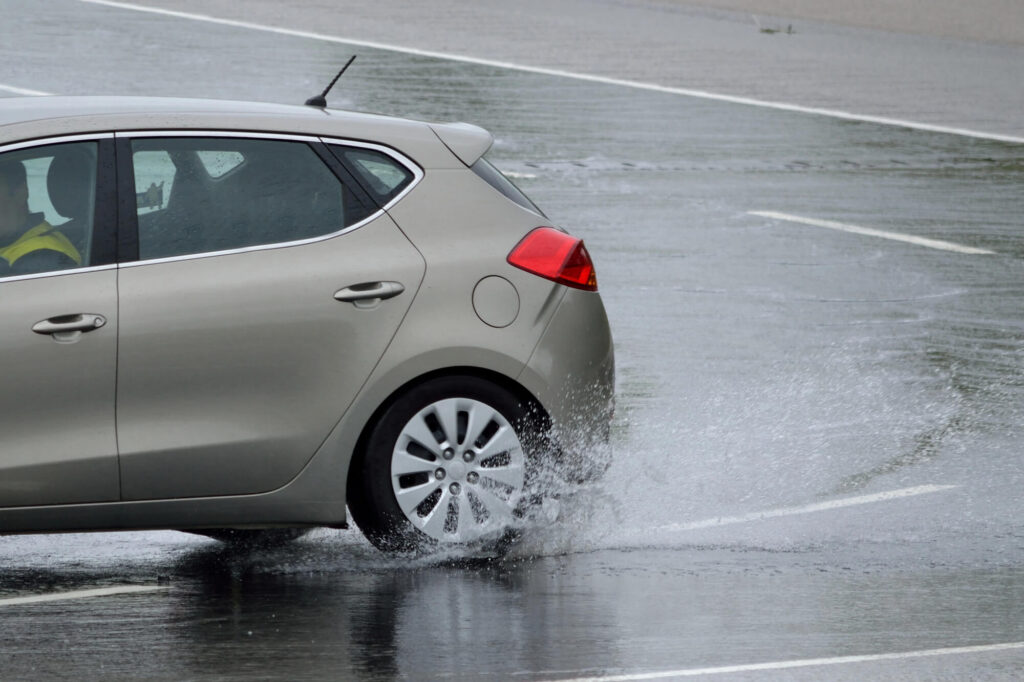
The difference between a scare and an accident on a stormy night often hinges on how quickly a driver can identify and respond to the signs of hydroplaning. Hydroplaning occurs when car’s tires lose contact with the road surface and ride up on a film of water — reducing the contact patch between tire and pavement to the point where steering, braking, and acceleration all become significantly less effective. This can happen at speeds as low as 35 mph, and hydroplaning risk increases with higher speeds and standing water — making it a genuine threat on any wet road, not just flooded streets or obvious large puddles. Hydroplaning is most dangerous during the first 10 minutes of rain, when oil and road residue mix with water to decrease traction before the rain has had time to wash the surface clean.
Hydroplaning begins with subtle cues long before it becomes a full-blown slide. Recognizing these cues allows you to maintain control over your vehicle instead of reacting in panic — and for many drivers, the difference between a controlled recovery and a spin comes down entirely to whether they recognized what was happening before making sudden movements that overloaded what little grip remained.
Recognizing the Early Signs
During heavy rain or when driving through puddles — especially on roads with known drainage issues or where standing water collects — pay close attention to your vehicle’s behavior. Avoid standing water and steer clear of large puddles where possible, and follow the tire tracks left by the vehicle ahead since those tracks displace water and offer a slightly drier surface than untracked pavement. Signs of hydroplaning include light steering and the vehicle feeling like it is floating — and hydroplaning can significantly reduce the effectiveness of steering, braking, and acceleration the moment the car’s tires lose meaningful contact with the road.
-
Steering Feedback Loss — if the steering wheel suddenly feels lighter or less connected, your tires may be losing traction due to water on the road. This is one of the earliest and most reliable signs that the contact patch between tire and pavement is shrinking
-
Unresponsive to Steering Inputs — if your car continues straight when you turn the wheel slightly for a curve, you may be driving on a film of water and the vehicle starts to travel in whatever direction physics dictates rather than where you are steering
-
Increased Engine Revs — a surge in engine revs or a flashing traction control light without a corresponding increase in speed suggests that the car’s tires are riding on water and losing the grip needed to transfer power to the road
Should you notice two or more of these signs on a wet road, assume hydroplaning has begun. Acknowledging this to yourself — thinking “my tires are riding on water, not the road” — can help prevent the instinctive urge to slam on the brake pedal or make sudden movements with the wheel, both of which cause tires to lose whatever grip remains and dramatically increase the chances of hydroplaning turning into a full spin. When it is essential to stay calm and not overreact, having a practiced mental response already in place is what separates drivers who recover cleanly from those who make the situation worse.
A Mental Script for Composure
Prepare a quick mental script to remain calm in such moments:
-
Recognize the Surface — “Water, not ice. Car’s tires on a film, not the road. Avoid jerking the wheel.”
-
Maintain Steady Hands — “Hands steady. Ease off the gas pedal. Steer gently. Wait for grip to come back.”
-
Regain Control — “Steer into the direction of the slide if the vehicle starts to rotate. When it bites again, keep slowing in a straight line.”
Practice this script in calmer situations so it is easy to recall when the stress level rises. Parents and new drivers can practice this script aloud together, reinforcing calm, collected responses in these tense scenarios. The safest response to hydroplaning is to make controlled movements until traction is regained — smooth steering corrections rather than jerking the wheel, and patience rather than panic. Utilizing these techniques helps ensure you are engaging in defensive driving, which is crucial for driving safely under adverse road conditions. Investing in suitable high-performance tires with adequate tread, keeping track of tire condition and tread wear, and regular tire maintenance like rotating tires and balancing, will also contribute to improved traction and the ability to resist hydroplaning on wet pavement. Properly inflated tires maintain the correct contact patch shape and help the tread channels disperse water effectively — improperly inflated tires decrease traction and meaningfully increase the chances of hydroplaning even at moderate speeds.
What to Do—and Not Do—When Your Car Starts to Hydroplane
When car hydroplanes, you may not be able to change what the car is doing immediately, but you can absolutely influence what happens next. The key is to make small, smooth inputs that give the tires a chance to reconnect with the road instead of fighting the slide — avoid jerking the wheel or making sudden movements, and steer gently in the direction you want to go rather than overcorrecting in the opposite direction. Steering into the direction of the slide can help regain control of the vehicle, while jerking the wheel in the opposite direction almost always makes the situation worse by overwhelming the car’s tires at the worst possible moment.
In almost every normal passenger car, the safest pattern is the same — ease off the accelerator, keep the wheel pointed where you want to go, let the tires bite again, then continue slowing down. If you remember nothing else, remember this: off the gas, hands steady, wait for grip, then slow more in a straight line. That one sentence is enough to carry most drivers through a short skid.
Your Calm Three-Step Response
Step 1: Ease off the accelerator
Gently lift your foot off the gas pedal so you stop adding speed. Do not slam on the brakes. You are giving the car’s tires time to cut back through the water and reconnect with the pavement — and vehicle weight shifting forward under hard braking can make the front tires lose contact with the road entirely, turning a manageable hydroplaning event into a complete loss of steering.
Step 2: Keep your steering smooth and steady
Hold the wheel with both hands and steer gently, keeping it pointed where you want the car to go. Avoid sudden movements, sharp corrections, or jerking the wheel — avoid jerking the wheel in particular, as it overloads the contact patch and sends the vehicle in unpredictable directions. Small, steady steering inputs reduce the chance of a sudden jerk when traction returns. After regaining control, reduce speed and increase following distance to give yourself a safe distance from other drivers and enough time to react if the road surface changes again.
Step 3: When the steering feels normal again, slow down more
As soon as you feel the steering respond normally, continue easing your speed down. If you need to brake, do it gently and steadily. In a car with anti-lock brakes, firm steady pressure lets the braking system work — in an older car, lighter repeated presses help avoid locking the wheels and causing the car’s tires to lose the rolling grip needed to steer.
Panic Moves that Turn a Slide Into a Spin
Certain reactions are completely natural but exactly wrong when a car hydroplanes:
-
Slamming hard on the brakes the instant you feel slipping — this shifts vehicle weight abruptly and causes tires to lose contact with whatever grip they still had
-
Cranking the wheel sharply toward where you want to go or jerking the wheel in the opposite direction of the slide
-
Hitting the gas to “power out” of the water like a racetrack video — this forces the car’s tires to spin faster on a surface where they have no traction and dramatically increases the chances of hydroplaning getting worse rather than better
Each of these overloads the tiny contact patch your tires might still have. If you catch yourself starting one of them, back off and return to the same simple pattern — off the gas, hands calm, steer gently, wait for grip, then slow more. Practicing that response just a few times with a professional instructor in a safe low-speed setting can make it feel natural instead of forced.
Habits and Myths That Quietly Raise Your Hydroplaning Risk
Teens rarely set out to drive unsafely in the rain. Most risk comes from habits that feel normal and myths that no one has challenged out loud. Calling these out together as parent and teen turns vague warnings into clear behavior changes.
The two big ingredients are simple — how fast you choose to go for the conditions, and how much space you leave. Heavier vehicles are less likely to hydroplane than lighter ones, which means many drivers in smaller cars need to be more conservative with speed in wet conditions than they might assume. Hydroplaning increases with higher speeds and standing water — and hydroplaning risk increases significantly when water depth exceeds one tenth of an inch on the road surface, a threshold that is easy to reach during moderate rain on poorly draining roads.
Layer distractions and overconfidence on top of that, and the odds of a vehicle starting to hydroplane climb even if you have never had a close call before.
Everyday Habits That Eat Away Your Safety Margin
These patterns show up in a lot of teen crash reports:
-
Driving at the usual dry-day vehicle speed even in heavy rain rather than slowing down to reduce the chances of hydroplaning — to prevent hydroplaning, drivers should slow down in wet conditions, avoid standing water, and steer clear of large puddles where water depth is unpredictable
-
Following too closely behind other drivers, especially large vehicles that throw sheets of spray — driving in the tire tracks left by the vehicle ahead can help avoid deeper water, but only when you maintain a safe distance that gives you time to react
-
Letting phones, music, or friends pull attention away when visibility is already low and flooded streets or standing water can appear suddenly
Each habit takes a bite out of the time and space you would need to ride out a skid safely. Replacing “just be careful” with “here is what we do differently when it is raining” gives your teen something concrete to practice.
Why Technology Doesn’t Cancel Physics
Modern cars come with anti-lock brakes, traction control, and stability systems that can help you keep some control when tires slip. They are excellent backups — but they cannot rewrite the laws of friction. If a vehicle starts riding on water instead of the road, no computer can create a contact patch that is not there. Properly inflated tires with adequate tread give these systems the best possible chance of helping — but improperly inflated tires or worn tread that cannot resist hydroplaning effectively will defeat even the most sophisticated electronic safety systems at highway speeds.
A quiet but dangerous myth is “the car will save me.” If a teen believes the electronics will handle it, they may use cruise control on wet roads, follow other drivers too closely, and feel comfortable driving faster in heavy rain than they should. Note that using cruise control on wet surfaces is one of the most dangerous habits many drivers carry without realizing it — use cruise control only on dry roads, and always switch it off when rain begins. When they finally experience hydroplaning, it is a shock to discover that technology cannot undo a bad decision about speed or following distance.
The safest mindset is simple — those systems are there to help when you have already made your best choices, not to let you ignore conditions.
A Simple Rain-Day Checklist for Teens and Parents
Many hydroplaning moments can be avoided with the right precautions. A quick routine before you hit the road in the rain can significantly reduce the chances of hydroplaning and your tires losing traction on water. Consider this as setting both the car and driver into rain mode — not a lengthy chore list but a safety measure that becomes second nature, just like buckling a seatbelt.
Quick Pre-Drive Rain Checklist
Here is a straightforward way to remember what to check and why it matters on a wet day:
-
Tire Condition and Tread Depth — adequate tread is critical to resist hydroplaning and channel water away from the contact patch. Use the Lincoln’s head test as a quick check — if you can see the top of Lincoln’s head when a penny is inserted into the tread groove, the tires are too worn to properly avoid hydroplaning in wet conditions. Drivers should check tire health regularly to prevent hydroplaning before it becomes a safety issue, and replace tires when the tread is close to the wear bars
-
Tire Pressure — properly inflated tires ensure the contact patch performs as intended and help the car’s tires resist hydroplaning at speed. Improperly inflated tires — either over or under inflated — decrease traction and increase the chances of hydroplaning even in light rain. Check pressure against the sticker inside the driver’s door and make a habit of rotating tires regularly to maintain even tread wear across all four positions
-
Wiper Condition — good wiper blades are essential for clear vision, helping you spot flooded streets, standing water, and large puddles in time to steer clear. Replace blades that streak, skip, or chatter
-
Headlights On — visibility is crucial in the rain for both the driver and other drivers on the road. Always turn on your headlights when your wipers are on
-
Cruise Control Off — use cruise control only on dry roads and always switch it off in wet conditions. Cruise control can inadvertently add gas over watery patches and significantly increase the chances of hydroplaning turning into a loss of control, particularly on highways where speeds are already high enough that even shallow standing water presents a serious risk
-
Allow Extra Time — avoid rushing, which pushes speed toward the threshold where car’s tires lose contact with the road. Leave earlier so you can slow down in wet conditions, maintain a safe distance from other drivers, drive in the tire tracks left by the vehicle ahead, and avoid standing water without the pressure of a deadline forcing poor decisions

Practice That Turns Rain Stress into Calm Skill
Reading about how hydroplaning occurs is useful — actually feeling how a car’s tires behave at low speed when grip changes is what really cements confidence. A few calm practice sessions in the right place and with the right support can turn a scary unknown into “I have felt this before, and I know what to do.”
Choose a light-rain day and a quiet low-speed area like a large mostly empty parking lot — somewhere you can avoid standing water that is too deep while still experiencing the subtle changes that come with a wet surface. With a parent or experienced adult in the passenger seat, you can:
-
Drive slowly through shallow straight puddles to feel subtle changes in steering feedback and sound — notice how the steering becomes lighter as the car’s tires approach the conditions where hydroplaning occurs
-
Practice easing off the gas and steering gently instead of making sudden movements the moment the road feels slick
-
Talk out loud about what each of you notices in the wheel, pedals, and seat — remain calm and discuss the sensations rather than reacting to them
Those short supervised sessions give teens a safe first experience with changing traction and give parents a clear view of how their teen reacts. The goal is not to scare anyone — it is to build a calm repeatable response while speeds are low and pressure is minimal. When a real storm and real traffic eventually show up, that practice is already in the bank.
Jungle Driving For When You Want Your Teen to Be Calm in the Rain
Hydroplaning does not have to be a mystery or a horror story. You now know what really happens when car’s tires lose contact with the road and experience hydroplaning — how to spot early warning signs, how to remain calm, and the simple three-step script — off the gas, steer gently, wait for grip, then slow more — that gives your teen the best chance to ride out a slide safely.
Just as important, you have seen how everyday choices about speed, space, tire condition, properly inflated tires, rotating tires, attention, and preparation can quietly raise or lower the chances of hydroplaning ever becoming a problem in the first place.
If you would rather not leave your teen’s first serious rain to chance, consider giving them a wet-weather coaching session with a professional instructor at Jungle Driving School. Our courses are in a controlled environment where they can practice those calm responses, learn a rain-day checklist that fits your car and your roads, and build real confidence before the freeway is flooded and the wipers are on high. That way, the next time the skies open up, you are not both hoping they will just figure it out — you know they have a plan, and so do they.