
Getting a license feels like the finish line. In reality, it’s the starting point for the riskiest year many new drivers will spend on the road. Traffic crashes are most common during a driver’s first year behind the wheel, and not because new drivers don’t care. For new drivers, their judgment, hazard awareness, reaction time, and traffic-risk management are still developing.
That’s where defensive driving techniques become essential.
Defensive driving techniques go beyond following traffic laws. They are driving habits that help drivers anticipate hazards, avoid collisions, reduce crash risks, and maintain control of a vehicle despite the actions of other drivers, changing weather conditions, traffic congestion, or unexpected road conditions.
Defensive driving is simply driving as if other people will make mistakes and giving yourself enough space, time, and visibility to handle those mistakes calmly.
Most importantly, being a defensive driver is not about driving in fear, but about driving with awareness and control.
While this guide is general educational information and not a replacement for your state’s traffic laws or licensing requirements, by the end, you’ll understand the core defensive driving techniques every new driver should master, including adapting to real-world driving conditions in a calm and safe way.
Why Do New Drivers Need Defensive Driving, Not Just Basic Skills?
New drivers need defensive driving because passing a driving test proves you can operate a vehicle, not necessarily that you can safely manage real-world traffic risks.
Where Traditional Driver’s Ed Came Up Short
The first year of driving introduces situations that are difficult to fully replicate during a standard driver’s education course, including busy intersections, distracted and aggressive driving from others, poor weather conditions, unexpected hazards, and heavy traffic.
Standard driver’s education focuses on traffic laws, traffic lights, stop signs, lane changes, parking maneuvers, and other foundational skills. That knowledge is essential.
However, many accidents occur because a driver sees a problem too late, follows another vehicle too closely, misjudges speed, or becomes distracted at a critical moment.
A Better Way is the Jungle Way
A truly effective driver’s education course also teaches defensive driving, which fills that gap by teaching drivers to anticipate problems before they happen.
Rather than reacting to emergencies at the last second, defensive drivers continuously:
- Scan the road
- Monitor traffic patterns
- Maintain safe following distances
- Adjust their speed based on road conditions and visibility.
For new drivers, this mindset can make a significant difference. Many preventable injuries and collisions occur because a driver assumes everyone else will follow the rules.
Defensive drivers understand that someone may run a red light, fail to yield at an intersection, make an unsafe lane change, or brake suddenly without warning. By expecting the unexpected, they gain valuable time and space to respond safely.
At Jungle Driving School, these defensive driving habits, skills, and mindset are built into a curriculum based on The Jungle Way, so that over time, these habits become automatic, helping drivers reduce crash risks, improve confidence behind the wheel, and build safer driving habits that can last a lifetime.
The Core Defensive Driving Techniques That Matter Most in the First Year
While every drive is different, the most effective defensive driving techniques all serve the same purpose: giving you more time to recognize hazards, make decisions, and avoid collisions.
New drivers often focus on operating the vehicle correctly, but safe driving also requires constantly managing space, visibility, speed, and attention.
The National Safety Council and other driver safety organizations consistently emphasize that most traffic crashes are preventable when drivers develop strong defensive habits, with the key being to build routines that help you anticipate problems before they become emergencies.
For most new drivers, these seven defensive driving techniques provide the strongest foundation for staying safe on the road:
- Maintain a safe following distance using the three-second rule.
- Scan 20 to 30 seconds ahead to identify hazards early.
- Check mirrors frequently and perform blind-spot checks before lane changes.
- Obey speed limits and adjust speed for weather and road conditions.
- Stay alert at intersections, traffic lights, and stop signs.
- Eliminate distractions and keep your eyes on the road.
- Watch for aggressive drivers and always leave yourself an escape route.
These habits work together. A driver who maintains proper following distance but becomes distracted by a cellphone still faces unnecessary risk. Likewise, a driver who scans effectively but drives too fast for conditions may not have enough reaction time to avoid a collision.
A Quick Defensive Driving Checklist
Before and during every drive, ask yourself:
- Am I maintaining at least a three-second following distance?
- Can I see 20 to 30 seconds ahead of my vehicle?
- Have I checked my mirrors recently?
- Am I driving at a speed that matches the current road and weather conditions?
- Am I watching for hazards at intersections and traffic lights?
- Are my hands on the wheel and my eyes focused on the road?
- Do I have space to maneuver if another driver makes a mistake?
If you can consistently answer “yes” to these questions, you’re already practicing many of the core defensive driving techniques that help prevent accidents and reduce traffic crash risks during your first year behind the wheel.
The sections below break down each of these defensive driving skills and show how they help new drivers build confidence, improve reaction time, and stay safer in real-world traffic.
1. Following Distance and Space Management
The following distance is one of the most important defensive driving techniques a new driver can master. A safe gap gives you time to see brake lights, process hazards, react calmly, and avoid sudden stops that can lead to a collision.
The Golden 3-Second Rule
The easiest way to measure your space is the three-second rule.
Pick a fixed object on the road, such as a sign or light pole. When the vehicle ahead passes it, count “one-thousand-one, one-thousand-two, one-thousand-three.” If you reach the same point before finishing the count, you are following too closely.
In good weather conditions, a three-second following distance is a strong starting point.
Add more time if:
- Rain
- Fog
- Darkness
- Heavy traffic
- Any poor road conditions
New drivers should also increase following distance at higher speeds, near large trucks, or any time visibility is limited.
Don’t Forget Your Sides and Rear
Space management is not only about the road ahead.
Defensive drivers also leave room on both sides of the vehicle, avoid driving in another driver’s blind spot, and stop far enough behind the vehicle in front to create an escape route if traffic suddenly changes.
Tailgating is especially dangerous because it reduces reaction time. If another driver is tailgating you, avoid braking aggressively or engaging with them. Maintain a steady speed, signal early, and allow them to pass safely when appropriate.
A safe following distance turns panic into control. It gives you the one thing every driver needs most when something goes wrong: time.
2. Mirror Use and Blind-Spot Habits
Safe drivers build a complete picture of what is happening around their vehicle. That starts with proper mirror use.
Before driving, adjust your seat, steering wheel, and mirrors so you have a clear view of the road behind and beside you. Your rearview mirror should show the full rear window, while your side mirrors should help monitor nearby lanes and reduce blind spots.
Once the vehicle is moving, check your mirrors regularly. A quick glance every few seconds helps you track traffic, brake lights, aggressive drivers, motorcycles, cyclists, and vehicles preparing for lane changes.
Before changing lanes, use a consistent sequence:
- Check your rearview mirror.
- Check your side mirror.
- Signal early.
- Look over your shoulder to check the blind spot.
- Move smoothly when the lane is clear.
This pattern helps prevent side-swipe accidents and surprise conflicts with vehicles you did not see.
Safety features such as blind-spot alerts and backup cameras can help, but they should never replace your own eyes. Sensors may miss fast-moving vehicles, motorcycles, bicycles, or hazards in poor weather conditions.
Good mirror habits also improve decision-making. When you already know what is behind and beside you, you can respond faster to sudden stops, traffic changes, and hazards ahead.
3. How Should New Drivers Scan for Hazards on Every Drive?
New drivers often focus too much on the vehicle directly in front of them. Defensive driving courses will always remind you to have a wider view, and for good reason.
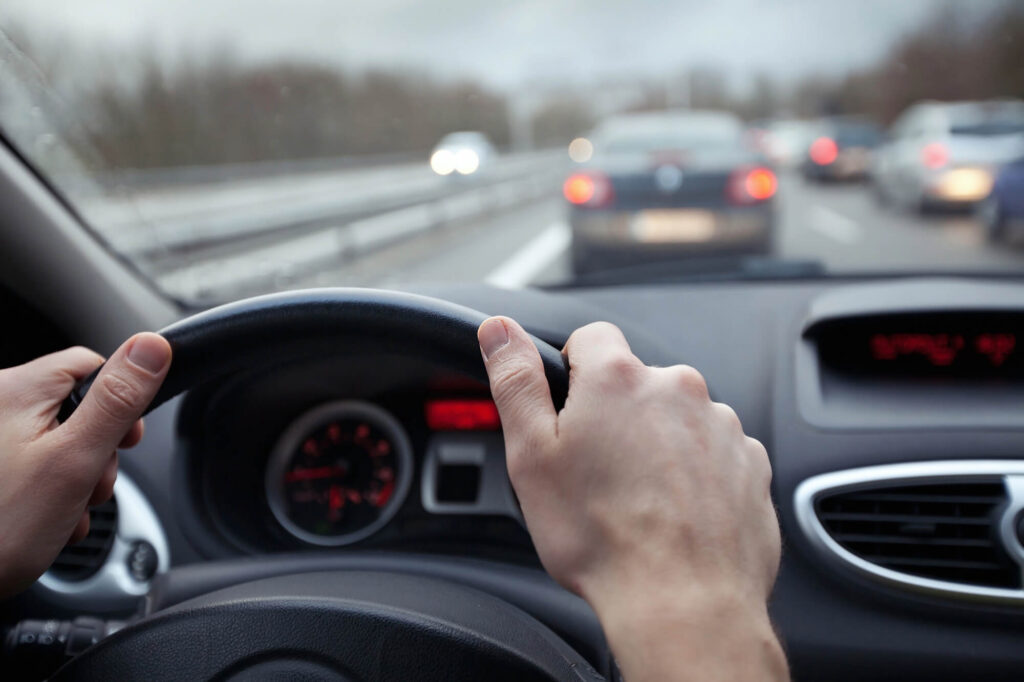
A strong hazard-scanning habit means moving your attention between the road near your vehicle, the traffic several cars ahead, your mirrors, intersections, sidewalks, driveways, and the far distance. The goal is to identify hazards early, before they require emergency braking or a last-second lane change.
One useful behind-the-wheel tip is to scan 20 to 30 seconds ahead whenever possible.
This gives you time to notice traffic lights, brake lights, stopped vehicles, pedestrians, construction zones, road debris, and drivers who may be about to make unsafe moves.
Watch for clues such as:
- A car is creeping forward at a stop sign.
- Brake lights several vehicles ahead.
- A pedestrian standing near a crosswalk.
- A driver drifting in their lane.
- A vehicle waiting to turn left at an intersection.
- A cyclist or a parked car door is near your lane.
At intersections, never rely only on a green light. Keep your eyes on the road and check for drivers who may run a red light, fail to yield, or turn unexpectedly.
Some instructors use commentary driving to help new drivers build this skill. The driver calmly says what they notice: “brake lights ahead,” “car waiting to turn,” “pedestrian near the curb.” You do not need to do this forever, but it trains your brain to recognize hazards before they become emergencies.
The better your scan, the more time you have to react.
4. Adapting Your Scan for Different Environments
The same defensive driving techniques apply everywhere, but different road conditions require different levels of attention.
City Driving
City driving requires wider scanning because hazards can appear from sidewalks, crosswalks, driveways, parked cars, intersections, stop signs, and traffic lights. Watch for pedestrians, cyclists, delivery vehicles, sudden stops, and drivers rushing through yellow or red lights.
Highway Driving
Highway driving requires looking farther ahead. At higher speeds, reaction time becomes even more important. Scan for brake lights in the distance, merging traffic, lane changes, aggressive drivers, and vehicles following too closely.
Nighttime Driving
Night driving reduces visibility, so drivers need more space and slower reactions. Headlights only show part of the road ahead, and pedestrians, animals, or stalled vehicles may be harder to see. Add following distance and reduce speed when visibility is limited.
Bad Weather
Bad weather conditions require even more caution. Rain, fog, snow, ice, and standing water can reduce traction and increase stopping distance. Worn tires, poor brakes, or weak windshield wipers can make these conditions even more dangerous.
Use this quick guide:
| Environment | Following Distance Target | Scanning Focus |
| City streets | At least 3 seconds | Intersections, crosswalks, parked cars, stop signs |
| Highways | 3–4+ seconds | Brake lights, lane changes, merging traffic |
| Night driving | Add 1+ second | Headlight range, glare, and unlit hazards |
| Rain or bad weather | Add 2+ seconds | Road surface, tire grip, spray, sudden stops |
| Heavy traffic | 3+ seconds when possible | Brake lights, aggressive drivers, escape routes |
The rule is simple: when visibility, traction, or traffic gets worse, slow down and create more space.
Defensive driving is not about reacting perfectly at the last second. It is about adjusting early so you rarely need a last-second reaction at all.
5. Managing Speed, Reaction Time, and Traffic Risks
Speed management is one of the most important defensive driving techniques because it directly affects your reaction time, stopping distance, and ability to avoid a collision.
Many new drivers assume that staying within posted speed limits automatically makes them safe. In reality, defensive driving means adjusting your speed to match current traffic, weather conditions, visibility, and road conditions.
Even a few extra miles per hour can significantly increase stopping distance. When a driver is speeding, they have less time to recognize hazards, process information, and apply the brakes. That reduced reaction time can turn a close call into an accident.
Defensive drivers constantly evaluate their surroundings and ask themselves whether their current speed is appropriate.
Pay special attention to:
- Traffic lights and changing signals.
- Stop signs and uncontrolled intersections.
- School zones and pedestrian crossings.
- Curves with limited visibility.
- Areas where traffic frequently slows unexpectedly.
Remember that traffic laws establish maximum speed limits, not necessarily the safest speed for every situation. Driving slightly below the speed limit during poor weather conditions or heavy traffic often gives you more control and more time to react.
One useful habit is to continually look for brake lights several vehicles ahead rather than focusing only on the car directly in front of you. Spotting a wave of slowing traffic early allows you to brake gradually instead of making sudden stops that increase the risk of rear-end collisions.
The safest drivers aren’t necessarily the slowest drivers, but the drivers who consistently leave themselves enough time and space to respond safely when conditions change.
6. Eliminating Distractions Behind the Wheel
A vehicle can travel hundreds of feet in just a few seconds. Looking away from the road for even a brief moment can prevent a driver from noticing a hazard, a stopped vehicle, or a pedestrian entering a crosswalk
That’s why one of the most effective defensive driving techniques is eliminating distractions before they become dangerous.
Keep That Phone Away While Driving
The biggest distraction for many new drivers is a cellphone. Reading a text message, checking social media, or responding to a notification takes your eyes off the road and your mind away from driving.
Many smartphones now offer automatic replies and “Do Not Disturb While Driving” features that can help reduce temptation.
The Multiple Distractors New Drivers Will Face
Distractions aren’t limited to phones. Other common sources include:
- GPS or navigation systems.
- Radios and entertainment controls.
- Conversations with passengers.
- Eating or drinking while driving.
- Searching for items inside the vehicle.
A simple defensive driving rule is to keep your eyes on the road, your hands on the wheel, and your attention focused on driving.
If you need to adjust directions, answer a call, send a message, or deal with a distraction, pull over safely first. No destination is important enough to justify taking unnecessary risks.
A Passenger Should Support, Not Distract You
New drivers should also remember that passengers can either improve or reduce safety.
Supportive passengers can help with navigation and awareness, while loud or distracting passengers can increase the likelihood of mistakes.
Learning how to maintain focus despite distractions is a skill that pays dividends throughout a driver’s lifetime.

7. Understanding Your Vehicle’s Safety Features
Defensive driving isn’t just about what happens outside your vehicle. It also involves understanding the equipment designed to help keep you safe.
Modern vehicles contain numerous safety features, but those features are most effective when drivers understand how they work and what their limitations are.
Use ABS Brakes Wisely
For example, ABS brakes (Anti-Lock Braking Systems) help drivers maintain steering control during hard braking situations. Rather than pumping the brakes, drivers should apply firm, steady pressure and allow the system to do its job.
Keep Tires in Tip-Top Shape
Vehicle tires also play a critical role in defensive driving. Tires provide the grip needed for accelerating, braking, and steering. Worn tires can significantly reduce traction, especially during rain or other adverse weather conditions, which is why all drivers should constantly check their tire pressure, condition, and tread depth.
New drivers should also routinely check:
- Brake performance.
- Windshield wipers.
- Headlights and brake lights.
Learn How to Deal With Basic Breakdowns
Mechanical failures are rare, but they can happen.
Knowing how to respond to a tire blowout, overheating engine, brake problem, or other unexpected issue can help prevent a minor problem from becoming a serious incident.
RV Drivers and Towers Should Be Extra Prepared
Drivers who tow trailers or recreational equipment should also recognize that trailer brakes, hitches, and changes in vehicle weight affect handling and stopping distance.
RV drivers and drivers towing trailers must account for a higher center of gravity and longer braking distances when making turns or slowing down.
The more familiar you are with your vehicle’s capabilities and limitations, the better prepared you’ll be to make safe decisions when conditions become challenging.
What Does a First-Year Defensive Driving Framework Look Like at Home?
A first-year defensive driving framework doesn’t need to be complicated. The goal is to build safe habits gradually until they become automatic.
Rather than trying to improve everything at once, focus on one defensive driving technique at a time. Short, consistent practice sessions are often more effective than occasional long drives that overwhelm new drivers.
A Simple Weekly Focus Plan
A practical approach is to assign a specific defensive driving skill to each week:
- Week 1: Following distance and the three-second rule.
- Week 2: Mirror use and lane-change habits.
- Week 3: Hazard scanning and intersection awareness.
- Week 4: Speed management and reaction time.
After completing the cycle, repeat it while introducing more challenging driving environments such as highways, nighttime driving, or heavy traffic.
Keeping a simple driving journal can also help track progress. After each drive, record one thing that went well and one skill that needs additional practice.
Milestones to Watch for in Year One
Several signs indicate that defensive driving habits are becoming second nature:
- Maintains a three-second following distance without reminders.
- Consistently checks mirrors before lane changes.
- Identifies hazards before they become immediate threats.
- Adjusts speed naturally when road conditions change.
- Demonstrates awareness of traffic patterns at intersections.
- Avoids distractions and stays focused on driving.
Once these behaviors become routine, new drivers are usually ready to take on more complex driving situations with confidence.
How Parents Can Coach Defensive Driving Without Constant Conflict
Parents play an important role in helping new drivers develop safe habits, but constant criticism can create tension and make learning more difficult.
The most effective coaching style focuses on awareness rather than correction.
Shift from Criticism to Questions
Instead of immediately pointing out mistakes, encourage your teen to evaluate situations independently.
Questions such as:
- “What hazards do you see ahead?”
- “How much following distance do you have right now?”
- “What do you think that driver is about to do?”
- “If traffic suddenly stopped, would you have enough room to brake safely?”
help build the thought process behind defensive driving.
The goal is to teach your teen to constantly assess risk on their own rather than rely on reminders from someone else in the vehicle.
Save longer discussions for after the drive, whenever possible, so you can begin with positive observations before discussing areas for improvement.
Turning Defensive Driving Into a Habit With the Right Support
Reading about defensive driving techniques is a valuable first step. Practicing them consistently in real traffic is what ultimately reduces risk.
The most effective defensive drivers develop habits that become automatic.
These habits then help reduce the likelihood of accidents, preventable injuries, and traffic crashes while building confidence behind the wheel.
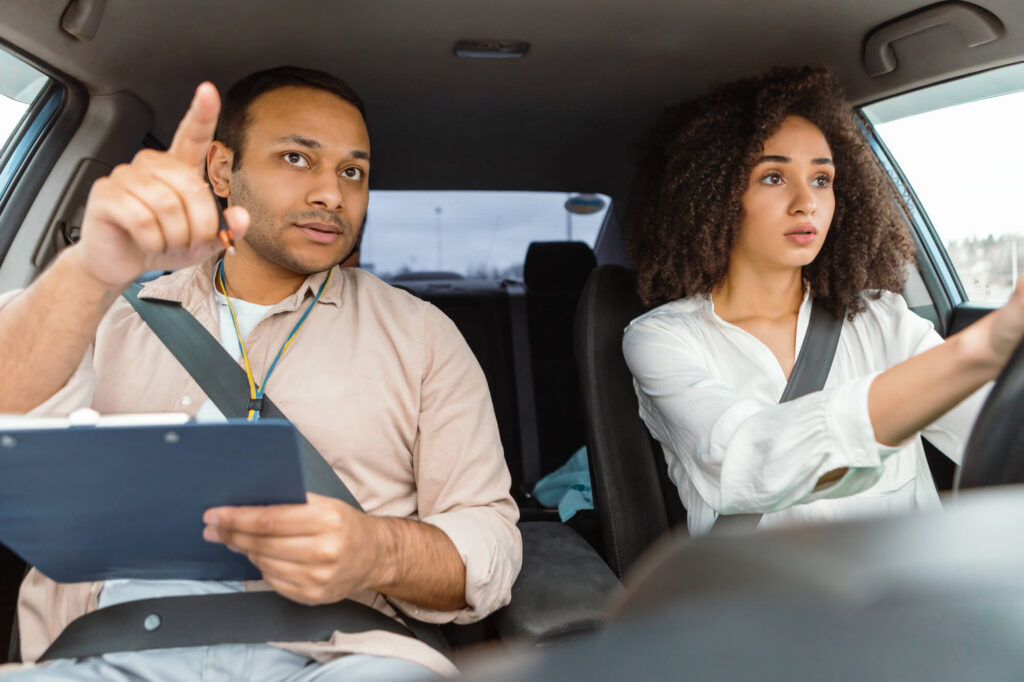
For many new drivers, working with a qualified instructor can accelerate that learning process. An experienced instructor can identify blind spots, reinforce positive habits, and provide behind-the-wheel tips that are difficult to learn from reading alone.
At Jungle Driving School, students learn how to apply defensive driving techniques in real-world situations. From managing following distance and recognizing hazards to handling aggressive drivers and navigating challenging road conditions, our programs focus on building the awareness, judgment, and confidence needed for a lifetime of safe driving.
If you want to strengthen your defensive driving skills or help your teen become a safer driver, find the nearest Jungle Driving School near you to get started.