
Your teen may feel solid driving to school in daylight, then suddenly feel like a beginner again the first time they pull out after dark.
Headlights change what they can see, shadows hide hazards, and a long, tiring day leaves less mental energy for decisions that matter for safety, confidence, and their future license and insurance costs. Night driving inherently brings challenges, including reduced visibility, the risk of headlight glare, and potential vision issues due to reflections or eye strain.
Driving at night doesn’t have to be scary or mysterious. When you treat it as its own skill set and build a few clear habits, those first anxious trips can turn into calm, predictable drives. Instructors see the same patterns over and over with new drivers, and the teens who do best all learn the same things: how to use their headlights effectively, manage speed and space, respect fatigue, shut down distractions, and keep the vehicle “night-ready” with proper vehicle maintenance before it rolls.
Why Nighttime Driving Is the Hidden Test for Teen Drivers
Driving at night presents unique challenges due to reduced night visibility and increased risk factors.
Weak scanning, improper use of headlights, or incorrect speed can become significant hazards in less forgiving conditions. In lower light, contrast drops, peripheral vision shrinks, and glare from headlights can temporarily impair a driver’s vision, affecting reaction times.
Any delay in noticing or reacting to potential obstacles, such as wildlife, pedestrians, or cyclists, can become dangerous quickly. This is why it’s crucial for both new and experienced drivers to pay extra attention to vehicle safety and their surroundings when night driving.
Teen drivers are particularly more likely to crash at night because inexperience, fatigue, and low visibility all hit at once. Even though teens usually drive fewer miles after dark, a disproportionate share of serious crashes happen then, especially on weekend evenings and after late school events. According to the National Highway Traffic Safety Administration (NHTSA), fatal car crash rates for teen drivers rise significantly at night, especially during weekend evening hours.
Many states also limit how late teens can drive or how many young passengers they can carry at night. Your family rules should always build on top of those legal requirements, not replace them.
Certain places and times are especially risky for new drivers at night:
- Poorly lit highways in rural areas – high speeds, long stopping distances, and hard-to-see hazards such as deer or other wildlife.
- Fast arterials with few turn lanes – sudden braking and quick lane changes from other drivers.
- Areas near bars, stadiums, or event venues – more impaired or distracted drivers, increasing the risk of accidents.
Mapping these risks onto your teen’s actual routes makes it easier to set sensible limits on curfew, speed limits, and which roads and conditions are suitable for their experience level.
For example, together, plan routes that avoid high-risk areas and consider factors such as the full range of headlights, proper use of high beams, and maintaining following distances.
Use vehicle maintenance checks, ensuring tires have adequate tread depth, windshield wiper blades are functional, and headlights are properly aligned, to promote safety and reliability.
The practical takeaway is clear: night driving requires its own set of skills. Treating it as such with planned, supervised practice will help novice drivers gradually build confidence and competency in more challenging environments.
The “Night‑Ready Five” Framework for Safer Night Driving
The “Night‑Ready Five” is an essential framework for ensuring vehicle safety while driving at night. It helps you and your teen to manage night visibility, beams, and road hazards effectively. By focusing on key aspects, this framework simplifies night driving into a checklist that assures safety without overwhelming drivers with too many rules.
Here’s how it breaks down:
- Cone‑of‑light speed and space – Adjust your speed to ensure you never drive faster than your headlight range, which is crucial for safe braking and spotting obstacles like wildlife or pedestrians.
- Headlight and glare control – Use low/high beams appropriately to manage glare from oncoming traffic and other vehicles. Consider anti-reflective lenses or coatings if you experience glare or vision issues.
- Fatigue and impaired-driver defense – Be aware of drowsiness and slower reaction times. Limit your driving time and always have a backup plan for safe transportation if you feel fatigued.
- Distraction lockdown – Implement stricter rules against using phones, adjusting the infotainment system, or other distractions while driving in low-visibility situations. All focus should be on the road and dashboard lights.
- Night-ready vehicle checks – Conduct thorough vehicle inspections, including headlight alignment, tire pressure, wiper blades, and windshield clarity. Ensure emergency gear and breakdown cover are up-to-date, particularly for drives on rural or trunk roads.
Responding to Common Night Driving Risks
Understanding these risk factors will enhance your nighttime driving experience:
| Risk factor | Why is it worse at night | How your teen should respond |
| Low visibility | Nighttime conditions reduce visibility on roads, with increased blind spots | Slow down, maintain a safe following distance, and use dipped beams appropriately |
| Fatigue | Sleep deprivation affects vision and can delay reaction times | Schedule eye exams, manage sleep patterns, and opt for shorter nighttime driving |
| Risky drivers | Higher incidence of impaired drivers or those violating speed limits | Keep a safe distance from erratic drivers and diversify routes or use traffic info maps for real-time updates |
Emphasizing these elements in a family agreement on driving at night can provide clear guidelines on routes, traffic conditions, phone usage, and other aspects, making nighttime journeys safer and more predictable.
Night Driving Tip 1: Drive Within Your Cone of Light (Speed and Space)
When driving at night, it’s crucial to manage your speed and vehicle safety by staying within your cone of light. If you can’t stop within the range of your headlights, you’re driving too fast for night conditions. This becomes highly important for night visibility and reducing driving risk on the roads.
- Slow Down if Beams Aren’t Enough: At night, your driving world is limited to what your headlights illuminate. On unlit roads, imagine a potential obstacle such as a stalled car or a deer at the edge of your headlight range. The essential rule is simple: if you reach that point before you can brake smoothly to a stop, then reduce your speed. This precaution is essential for rural areas with more wildlife and less lighting.
- Three-Second Rule Turns into Four Seconds at Night: Maintain a safe following distance of at least four seconds at night; this is especially true in adverse conditions like rain, snow, or when driving during winter, where visibility and vehicle control can be compromised.
Extra Careful When Roads Curve or Bend: Curves, hills, and rural stretches further narrow your safe reaction area, requiring more cautious driving. Slow down before a blind bend or crest to handle surprise encounters with obstacles, cyclists, or pedestrians, a key part of driving like a Jungle Cat, and not just another scared animal on the road.
Night Driving Tip 2: Use Headlights Wisely and Manage Glare for Optimal Night Visibility
Nighttime driving requires careful management of your vehicle’s headlights to ensure optimal night visibility and minimize glare. Proper use of low and high beams enhances your ability to spot potential hazards, such as pedestrians, cyclists, and wildlife like deer, while maintaining vehicle safety.
- Maximize Your Headlights: Your low beams should be in use from dusk to dawn, and during any reduced visibility road conditions, like foggy or rainy weather, even on well-lit urban roads. High or full beams are best reserved for dark, rural areas with minimal traffic, where their extended headlight range can alert you to obstacles and increase your reaction times. Always switch to dipped beams when you spot oncoming traffic or a vehicle in front to prevent headlight glare, which can temporarily blind other drivers.
- Develop a Glare Mitigation Strategy: A guideline for handling glare makes driving less stressful:
- Shift your gaze to the right edge line of the road to avoid staring directly into oncoming headlights and reduce the risk of night blindness.
- Ease off the gas slightly while keeping your direction steady, maintaining control over the vehicle without unnecessarily reducing traffic flow speed.
- Avoid sudden braking or swerving, which can lead to accidents due to other drivers’ delayed reaction times.
- Keep Your Windshield Clear: A clean windshield is crucial for reducing glare and enhancing night visibility. Ensure wiper blades are in good condition to maintain clear sightlines, and regularly clean both the inside and outside glass surfaces. Clouded headlight bulb covers should be restored to ensure maximum light output, enhancing both your vision and safety.
- Consider Anti-Reflective Solutions: For those who experience significant glare issues, consider anti-reflective coating lens designs on glasses and ensure regular eye exams to address any vision issues that can affect night driving. During vehicle inspection, check dashboard lights to avoid unnecessary reflection on the windshield, which can distract the driver.
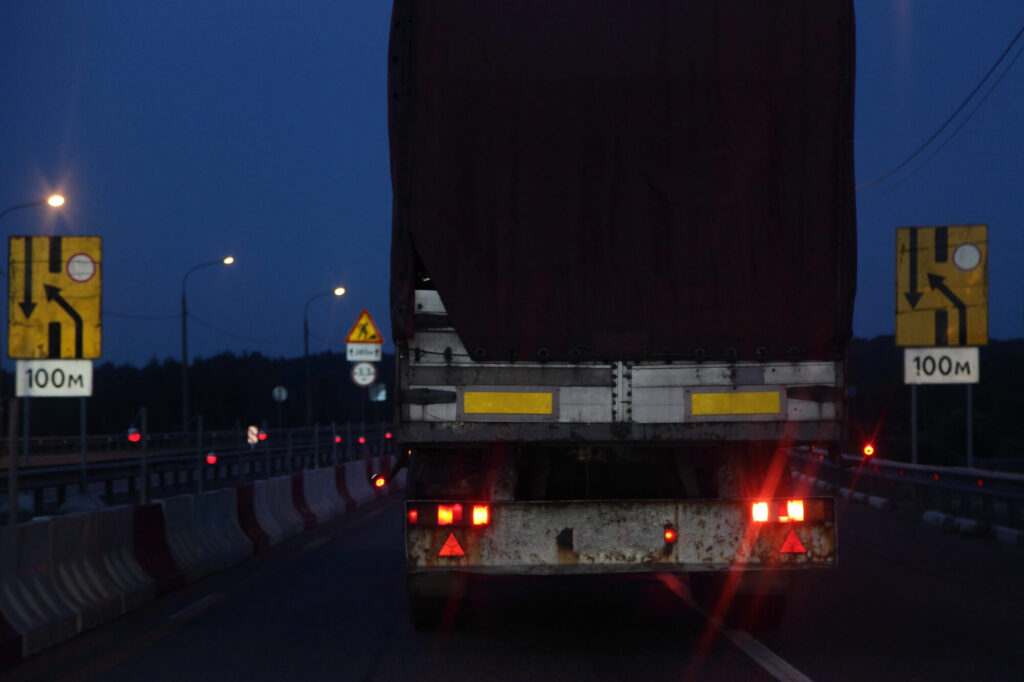
Tip Night Driving 3: Respect Fatigue and Watch for Impaired or Drowsy Drivers
If your teen is too tired to drive, the answer is simple: they shouldn’t be behind the wheel. A full day of school, activities, and homework can leave their brain worn out just as roads are hardest to read at night.
Common red flags of drowsy driving that it’s time to stop include:
- Frequent yawning or heavy eyelids that don’t improve.
- Drifting within the lane or touching lane lines.
- Not remembering the last stretch of road.
Realizing they’ve lost track of the last few minutes of driving is a major warning sign that it’s time to park the car and take a break, or hand the keys to someone rested.
Planning ahead makes safer choices easier.
Before busy weeks, agree that if your teen feels exhausted after a game, shift, or study session, the default is to ask for a ride, stay over, or use another safe option. It’s much easier to support that decision when you’ve already told them you’d rather get a late‑night call than a call from a hospital.
At the same time, your teen should assume some other drivers at night are impaired or badly distracted. Warning signs include:
- Weaving between lanes or riding the center line.
- Braking or speeding up for no clear reason.
- Drifting onto the shoulder or rumble strips.
- Driving without headlights or with only parking lights.
The safest move is to create space, drop back, avoid riding beside that vehicle, or choose another route. Trying to block, race, or “teach a lesson” only adds danger and pulls your teen out of the calm, defensive mindset you want them to build.
Night Driving Tip 4: Lock Down Distractions After Dark
Distracted driving is the number one cause of car crashes in the nation, and after dark, every distraction is more dangerous, so your teen’s rules around phones, music, and passengers should be stricter than in the daytime.
Road signs, other drivers, wildlife crossings, and other hazards are harder to see and take longer to interpret, which means there’s less extra attention left over for jokes, notifications, and playlist changes.
A small set of “distraction lockdown” rules can make a big difference:
- Phone out of reach and on silent unless parked somewhere safe.
- Navigation is set before moving, with the front passenger helping if possible.
- Very limited teen passengers in the first months of night driving.
Music and conversation count, too. Agreeing that you don’t shout over the music, that passengers help watch for addresses and hazards, and that volume stays low enough to hear sirens and horns keeps the car calmer.
These rules aren’t about control for its own sake; they protect the extra attention night driving quietly demands.
Night Driving Tip 5: Make Your Car “Night‑Ready” Before Every Drive
Before any night drive, a short “night-ready” check keeps your teen safer and avoids frustrating surprises. Seasoned instructors notice that simple issues, such as burned‑out brake lights, fogged windows, or dirty mirrors, can make a night lesson much harder than it needs to be.
A quick “night‑ready” check can include:
- All lights working—headlight bulbs, brake lights, and turn signals.
- Clear glass—windshield, mirrors, and back window free of fog, frost, and heavy dirt.
- Enough fuel to avoid an unplanned late‑night fuel stop.
It also pays to keep a basic emergency kit in the car. Simple items like a small flashlight, reflector triangles, a reflective vest, basic tools, and printed insurance and contact details give your teen options if something goes wrong after dark. If they do have to stop, the priorities are to move as far off the road as safely possible, turn on hazard lights, and stay well away from moving traffic, ideally on the side of the car away from the travel lane.
How to Safely Practice Night Driving With Your Teen
The safest way to build night driving skill is to treat it as a series of small, planned steps rather than one big leap into real traffic on poorly lit roads or two lane highways where oncoming vehicle lights and reduced visibility create the kind of complex, high-pressure conditions that new drivers are not yet equipped to handle without prior incremental preparation. Night time driving significantly reduces visibility — normal headlights offer only about 250 feet of sight at night compared to the full sight lines available during daylight hours, and even high beams extend that range to only about 500 feet — which means the margin for error on a dark road is substantially smaller than most teen drivers appreciate until they have experienced it under controlled, supervised conditions with an experienced adult present.
Start with very short drives on familiar neighborhood streets in low traffic areas at quieter times, so your teen can feel how speed, space, and visibility change without heavy pressure. Choose well-lit routes initially rather than poorly lit areas where lane markings, the white line at the road’s edge, pedestrians, and other hazards are hardest to identify — and use those early sessions to establish the foundational habits that keep teen drivers stay alert and stay safe on every night time driving trip that follows. Remind your teen that driving slower at night improves reaction time and that increasing following distance beyond the daytime standard is essential because normal headlights typically shine only 160 feet ahead, meaning the road ahead is visible for a shorter distance than the stopping distance required at highway speeds.
As their comfort grows on familiar low traffic areas and neighborhood streets, you can gradually add new pieces:
- A slightly later time of night when there are more vehicle lights, headlights, and glare from oncoming drivers that your teen needs to learn to manage — including the habit of avoiding looking directly at oncoming headlights and using the white line at the road’s right edge as a guide when bright lights from an oncoming vehicle create temporary blindness or significant glare
- A route that includes a few gentle hills or curves instead of only straight roads — conditions where lane markings become harder to track and where the limited 250 foot sight range of normal headlights creates genuine decision-making pressure around speed and space management
- One or two well-chosen trips on busier streets or two lane highways once basic night time driving habits feel steady — including practice with dimming high beams within 500 feet of oncoming drivers, adjusting interior lighting and dashboard lights to reduce distraction and reduce eye strain, and managing the glare from other cars that accumulates during longer drives in heavier traffic
Keep each outing short, debrief in the driveway, and agree on one small focus for next time rather than trying to fix everything at once. On longer drives or any session lasting more than 90 minutes, take regular breaks to reset your teen’s attention span — drowsy driving presents significant risks and teen drivers are particularly vulnerable to the attention and fatigue effects of night time driving because their developing nervous systems require adequate rest to maintain the focus that safe night driving demands. Drowsy driving crashes peak between midnight and 6 a.m., and fatigue is one of the most significant risk factors for the fatal accidents and fatal crashes that make night time driving statistically more dangerous than driving during daylight hours. Teaching your teen to recognize when they feel tired or feel drowsy — and to take regular breaks, get fresh air, or use caffeine appropriately to combat fatigue on long drives — is one of the most valuable and transferable tips for driving safely that any new driver can learn early.
That steady, predictable pattern of short sessions, regular breaks, and incremental progression gives your teen a clear message: night driving is just another skill you are learning together, not a pass/fail test they have to ace on the first try. Before every night driving session, conduct regular maintenance checks on the vehicle — clean headlights maximize light output significantly and improperly aimed headlights can blind oncoming drivers, so ensuring headlights are clean, properly aimed, and functioning correctly is one of the most important pre-drive safety steps for any night time driving practice session. Clean the windshield inside and out before night sessions as well — streaks on glass magnify glare from vehicle lights and oncoming drivers and significantly increase the temporary blindness and eye strain that make poorly lit roads and two lane highways genuinely hazardous for teen drivers still developing their night vision and glare management habits.
Extra Tip — Importance of Vision Checkups for Teen Drivers
Ensuring that teen drivers have regular vision checkups is crucial for their safety and the safety of others on the road, particularly during night time driving when reduced visibility, bright lights from oncoming drivers, and the limited range of normal headlights on a dark road combine to create the most visually demanding driving conditions any new driver will encounter. Annual eye exams help manage glare and vision issues at night that accumulate gradually and that teens may not recognize as deteriorating until the problem is significant enough to create real safety risk behind the wheel.
As teens might not be aware of gradual changes in their vision during night time driving and daylight hours alike, they can unknowingly face challenges such as difficulty seeing road signs, lane markings, the white line at the road’s edge, traffic lights, pedestrians in poorly lit areas, or other cars and other vehicles in low-light conditions on poorly lit roads and two lane highways. Students who need to wear glasses or who have an uncorrected prescription are at particular risk of temporary blindness and excessive glare from vehicle lights and bright lights from oncoming vehicles — and ensuring corrective eyewear is current and worn consistently during every night driving session is a non-negotiable safety requirement for any teen driver whose vision requires correction.
Night driving demands optimal visual acuity and peripheral vision because of reduced nighttime visibility, increased glare from headlights and interior lighting sources, and the potential for quick reactions in complex traffic situations on dark road environments where animals are more active — particularly from October to January when wildlife crossing two lane highways and poorly lit rural roads creates a genuine additional hazard that new drivers are rarely prepared for during their first months of independent night time driving.
Regular eye examinations can detect issues such as nearsightedness or astigmatism which can otherwise impair night vision or the ability to see lane markings, the white line, and the road ahead clearly in dim conditions on poorly lit roads. Use visors to shield from outdoor street lighting glare during practice sessions in well-lit urban areas, dim dashboard lights to avoid interior lighting distraction and reduce eye strain during longer night drives, and use night mode settings on any in-car display or new car infotainment system to minimize the additional light source distraction that bright screens create against a dark road environment. By addressing vision problems early with corrective eyewear or other treatments, teen drivers can maintain confidence and competence behind the wheel — reducing the risk of accidents, lowering the long-term auto insurance implications of a poor driving record, and enhancing overall road safety for themselves and oncoming drivers throughout their driving life.
Building Long-Term Confidence Behind the Wheel
If you are reading this, you already care about giving your teen more than the bare minimum of night time driving preparation. Your goal is not just passing the test — it is feeling calm when they pull out after dark onto poorly lit roads, two lane highways, and busy streets where oncoming drivers, glare from vehicle lights, and the attention demands of night time driving require the kind of deeply ingrained habits that only come from structured, incremental practice with adequate rest, proper vision correction for teens who wear glasses, regular maintenance checks on headlights and windshield clarity, and an experienced adult providing real-time coaching on speed, space, glare management, and decision-making in genuinely challenging night driving conditions.
The five habits you have just seen give you a shared language to coach with and a simple way to decide which drives are safe for now — low traffic areas, familiar streets, well-lit routes with minimal glare from oncoming drivers — and which can wait until your teen’s confidence, attention span, and night vision management skills have developed sufficiently to handle the increased complexity of two lane highways, poorly lit areas, and high-traffic night driving environments. Alcohol-related fatal crashes are four times higher at night and speeding-related crashes account for 37 percent of nighttime fatalities — statistics that underscore why the habits your teen builds during these early supervised night driving sessions have consequences that extend far beyond the test and into the full arc of their driving life and auto insurance history.
Real confidence comes from doing the right things in the right order with someone experienced watching over the process and providing the structured, patient coaching that helps teens stay alert, combat fatigue on long drives, take regular breaks to reset their attention span, and develop the full set of night driving habits that reduce their risk of contributing to the fatal accidents and fatal crashes that make unsupervised teen night driving one of the highest-risk activities any parent navigates during their child’s adolescence.
Jungle Driving School instructors work with these night time driving challenges every week, carefully choosing routes through low traffic areas and progressively more complex environments and coaching on speed, space, glare management from oncoming drivers and vehicle lights, interior lighting adjustment, lane markings tracking on a dark road, awareness of animals in poorly lit areas during high-activity months from October to January, and real-time decision-making in conditions that genuinely replicate the night driving situations your teen will face independently during their first months behind the wheel. When you are ready for night to feel like just another normal part of your teen’s driving life — not a separate fear associated with poorly lit roads, bright lights from oncoming drivers, or the fatigue and attention demands of night time driving beyond their current skill level — contact Jungle Driving School for structured night driving coaching that helps teens build safer habits faster while giving parents more confidence during those first months of independent driving.