
For today’s teen drivers, a mobile phone is essential to their social lives.
It’s how teenagers stay connected, coordinate plans, and keep up with social media posts and text messages. The problem is that driving already uses nearly all of a new driver’s attention. A teen is actively learning how to control a vehicle, judge distance, and read traffic patterns in real time. Add buzzing cell phones and constant notifications, and you’re asking a beginner to divide attention in a situation where there’s almost no room for error.
Texting and driving is especially dangerous for young drivers because it creates visual, manual, and cognitive distractions at the same time. In just a few seconds of looking down at text messages or a social media app, a car at highway speed can travel the length of a football field or more with complete inattention to the roadway. According to the National Highway Traffic Safety Administration (NHTSA), distracted driving is a leading factor in motor vehicle crashes, including many fatal crashes involving teen drivers.
Teen drivers have less experience, slower hazard recognition, and reduced ability to recover from sudden changes. This increases crash risks, leading to more car accidents, injuries, and even teen deaths. These vehicle crashes don’t just affect the driver, but also parents, family members, schools, and entire communities across the U.S., including places like Washington, DC.
This guide will help you understand how common texting while driving is among high school students, why it leads to higher accident rates, and how to build habits that reduce distractions and keep your teen focused behind the wheel.
How Common Is Texting and Driving Among Teen Drivers?
Texting and driving isn’t rare.
It’s one of the most common forms of distracted driving among teen drivers and young adult drivers. For many teenagers, cell phone use behind the wheel feels normal, especially when it involves quick text messages, navigation, or checking social media posts. At Jungle Driving School, we regularly hear from parents concerned about how often their teens see peers using mobile phones while driving.
The statistics confirm those concerns. Data from the CDC’s Youth Risk Behavior Survey about transportation risk behaviors among high school students (2019) shows that nearly 4 in 10 high school students who drive reported texting while driving at least once in a 30-day period. That number doesn’t fully capture other common distractions, like adjusting music, checking maps, or engaging in social media app use, all of which contribute to cognitive failures and reaction delay behind the wheel.
The NHTSA links distracted driving to thousands of deaths and fatal crashes each year, with teen drivers among the most affected groups. Because teens already face higher crash risks, adding texting and driving significantly increases the likelihood of motor vehicle crashes, especially in high-risk situations like speeding, running red lights, or driving with passengers.
Parents often wonder if they’re overreacting. They’re not. When teens say, “everyone does it,” they’re describing a powerful form of social pressure reinforced by focus groups and behavioral research, where risky behavior becomes normalized despite known dangers. This aligns with concepts like perceived behavioral control, where teens believe they can manage distractions even when evidence shows otherwise.
Serious car accidents rarely come from dramatic moments. They often stem from routine behaviors, such as checking a notification, replying to a message, or briefly shifting attention away from the road. These small lapses can lead to devastating outcomes, including injuries, personal injury law cases, and long-term financial impacts like increased car insurance costs.
Three things are worth keeping in mind:
- Texting while driving is extremely common among teen drivers, even when they understand the risks.
- Distracted driving significantly increases crash risks, especially for inexperienced drivers.
- Regular, daily cell phone use, not just texting, contributes to dangerous cognitive and visual distractions.
Efforts like school programs and awareness campaigns help, but lasting change comes from consistent parent and student intervention, strong habits, and structured driver education, where safe driving becomes the default, not the exception.
Why Texting and Driving Is Dangerous for Teen Drivers
Texting while driving doesn’t just create one type of distraction, but it combines three forms of distracted driving at the same time. For teen drivers, this is especially dangerous because they are still developing the foundational skills needed to safely operate a vehicle.
When a driver reads or sends text messages, their eyes leave the road (visual distraction), their hands leave the wheel (manual distraction), and their attention shifts away from driving (cognitive distraction). These overlapping distractions significantly increase crash risks and reduce the ability to respond to sudden changes in traffic.
Here’s how safety experts, including the National Highway Traffic Safety Administration (NHTSA), define these three types of distractions and why they lead to more vehicle crashes and injuries among teen drivers:
| Type of Distraction | What It Means While Driving | Why It’s More Dangerous for Teen Drivers |
| Visual | Looking away from the road to read or check a phone | New drivers are still learning how to scan and interpret the road, so even a brief glance away increases missed hazards |
| Manual | Taking one or both hands off the wheel to hold or use a phone | Teens have less developed vehicle control skills, making it harder to correct mistakes quickly |
| Cognitive (Mental) | Thinking about a message or conversation instead of driving | Slows reaction time and reduces awareness, especially in drivers with limited experience |
When all three types of distraction happen together, as they do with texting and driving, the risk of motor vehicle crashes rises sharply. Even a brief moment of distraction can result in serious accidents, especially at higher speeds or in complex environments like intersections with red lights, pedestrians, or heavy traffic.
Each time a teen unlocks their phone, reads a message, and sends a reply, their attention shifts repeatedly between the screen and the road. This constant switching increases the likelihood of missing critical signals like brake lights, lane changes, or hazards involving trucks, vans, or other vehicles.
Even quick actions, such as checking a notification, adjusting a playlist, or interacting with a social media app, create the same dangerous mix of distractions. Behavioral research and simulator studies consistently show that mobile phone use leads to slower reaction times, poor lane control, and increased near misses, all of which contribute to higher accident and injury rates among teen drivers.
Everyday Examples Teens Recognize
For teenagers, the danger of texting while driving doesn’t usually come from extreme situations. Rather, it comes from small, repeated habits that feel harmless. These everyday behaviors are a major contributor to distracted driving and motor vehicle crashes involving teen drivers.
At Jungle Driving School, we regularly observe patterns that reflect how social pressure and constant connectivity influence driving behavior:
- Replying to Snapchat or TikTok streaks — the pressure to maintain streaks creates urgency tied to FOMO (fear of missing out), making texting feel more important than driving
- Posting or recording social media content while driving — active mobile phone use that combines visual, manual, and cognitive distraction
- “Quickly” checking a notification in slow traffic — leading to missed brake lights or sudden stops and increasing crash risks.
- Looking at directions after missing a turn — combining frustration with distraction, increasing the likelihood of accidents
These actions may seem minor, but they significantly increase the risk of vehicle crashes, injuries, and even fatal crashes. Over time, repeated behaviors like these normalize distracted driving, making it more likely that a teen driver will underestimate the real danger.
For many teen drivers, the issue isn’t a lack of knowledge—it’s a combination of social pressure, habit formation, and perceived control over distractions. Without intervention from parents, guardians, and structured driver education, these patterns can lead to long-term effects, including higher accident rates and increased car insurance costs.
Why Texting and Driving Is More Dangerous for Teen Drivers than Adults
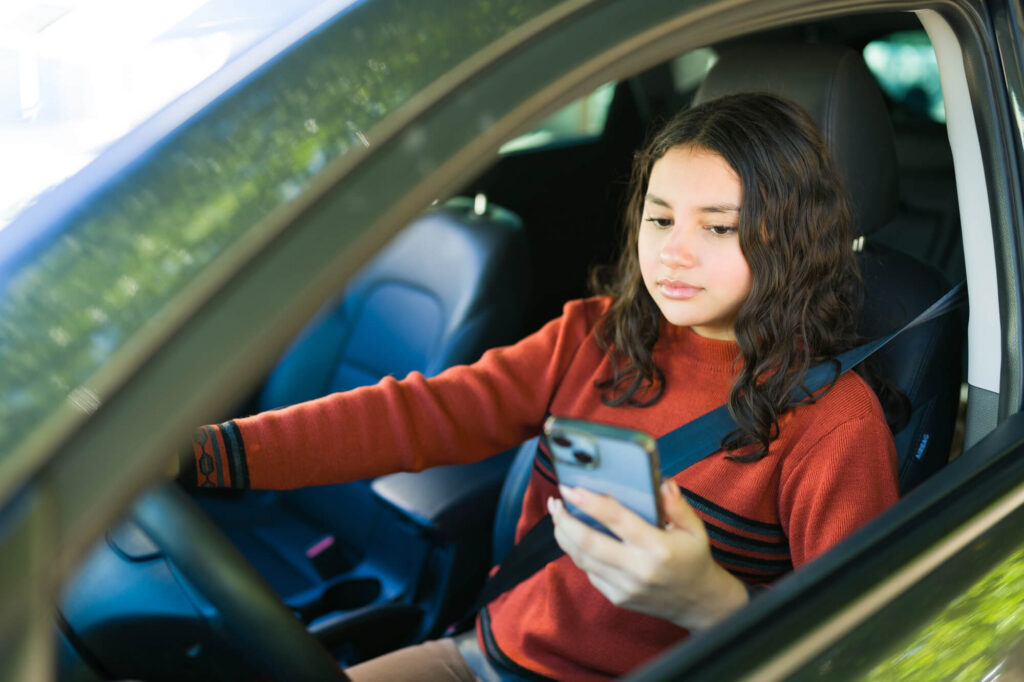
Texting and driving is risky for any driver, but teen drivers face significantly higher crash risks due to inexperience and developmental factors. According to the Insurance Institute for Highway Safety, drivers ages 16–19 are nearly three times more likely to be involved in car accidents and motor vehicle crashes than older drivers.
This increased risk exists because teen drivers are still learning how to operate a vehicle, recognize hazards, and respond quickly to changing road conditions. When texting while driving is added, it amplifies existing weaknesses like slower reaction times, reduced situational awareness, and greater inattention to the roadway.
Two major factors make distracted driving more dangerous for teenagers:
First, the brain is still developing. Research from organizations like the American Academy of Pediatrics and broader behavioral research shows that areas responsible for decision-making and impulse control mature later than those tied to reward and social validation. A notification from cell phones, especially involving friends, social media posts, or group chats, can trigger an immediate response driven by social pressure and FOMO (Fear Of Missing Out).
Second, real-world driving conditions often make things worse for teen drivers:
- Many trips happen at night, increasing the likelihood of fatal crashes due to reduced visibility and fatigue
- Teens frequently drive on unfamiliar roads, increasing cognitive load and the chance of cognitive failures
- The presence of passengers adds noise, distraction, and pressure to engage socially
- Risky behaviors like speeding or rushing through red lights are more common among young drivers
When these factors combine with texting and driving, the result is a significant increase in accidents, injuries, and even teen deaths. This isn’t about reckless behavior, but about predictable outcomes when inexperience, distraction, and environmental factors overlap.
Understanding this helps shift the conversation from blame to prevention. With the right structure, guidance from parents and guardians, and strong driver education, teens can learn to manage distractions and reduce their risk on the road.
Common Texting and Driving Myths Teens Believe
Many teen drivers don’t see themselves as engaging in dangerous distracted driving, even if they regularly use their mobile phones behind the wheel. Instead, they believe certain situations make texting while driving safe. These myths are common among high school students and are often reinforced by peer behavior and perceived behavioral control, the belief that they can manage distractions without consequences.
Addressing these misconceptions directly is key to reducing crash risks and preventing motor vehicle crashes.
Myth 1: “I Only Text At Red Lights.”
Many teens believe that stopping at red lights makes it safe to check text messages or use cell phones. In reality, intersections are among the most dangerous places for car accidents and vehicle crashes.
When a driver looks at their phone, their attention doesn’t immediately return to the road when the light changes. This creates a reaction delay at a critical moment, increasing the risk of hitting another vehicle, missing pedestrians, or failing to notice changing traffic conditions.
What to say: “If it’s important enough to answer, it’s important enough to pull over first.”
Myth 2: “I’m A Great Multitasker.”
Many teenagers believe they can manage texting and driving because they feel in control. However, behavioral economics and behavioral research consistently show that multitasking reduces performance in all tasks.
Behind the wheel, this leads to slower reaction times, lane drifting, missed traffic signals, and an increased likelihood of accidents and injuries. The combination of visual, manual, and cognitive distractions overwhelms even experienced drivers, making it especially dangerous for teens.
What to say: “Being a good driver means knowing when not to add extra tasks.”
Myth 3: “Hands-free Means Risk-free.”
Hands-free technology reduces some physical distraction, but it does not eliminate cognitive distraction. Talking, dictating messages, or interacting with voice systems still pulls attention away from driving.
For young drivers, whose mental workload is already high, this added distraction can increase the likelihood of motor vehicle crashes. The National Highway Traffic Safety Administration (NHTSA) emphasizes that any form of distracted driving, not just holding a phone, can contribute to fatal crashes and serious injuries.
What to say: “Hands-free helps, but it doesn’t make conversations risk-free while you’re still learning.”
How to Talk to Teens About Texting and Driving
You can talk about texting and driving without constant conflict by focusing on shared safety expectations instead of blame. Conversations about distracted driving often turn into lectures, but the goal is to create awareness and cooperation, and not resistance.
For many teenagers, cell phone use is deeply tied to social connection, including text messages, social media posts, and group chats. That’s why it’s important for parents and guardians to approach the topic with understanding rather than just rules.
A useful approach is to break the conversation into three parts: what you’re concerned about, what your teen experiences, and what you’ll agree to moving forward. Ask specific questions like, “When do you feel the most pressure to check your phone while driving?” This helps uncover real triggers like social pressure, boredom, or fear of missing out (FOMO).
To keep the conversation productive, you can:
- Acknowledge their experience (“I understand that replying quickly feels important.”)
- Be specific about risks (“I’m thinking about that busy intersection with red lights near school.”)
- Focus on real outcomes like car accidents, injuries, and long-term consequences, such as increased car insurance costs or even personal injury law situations.
- Invite collaboration (“What would make it easier to avoid using your phone while driving?”)
This kind of parent and student intervention is supported by behavioral research, which shows that teens are more likely to change behavior when they feel involved rather than controlled. Open dialogue helps teens recognize that distracted driving is a serious safety issue that affects them and others on the road.
How Parents Can Set the Standard at Home
Parents play a critical role in shaping how teen drivers behave behind the wheel. More than rules, it’s everyday behavior that sets the standard. If teens see parents using cell phones while driving, even briefly, they are more likely to view that behavior as acceptable.
Safe steering habits start with consistency at home.
Start With Your Own Habits
Before expecting change from your teen, model safe behavior yourself:
- Put your phone out of reach before getting the car moving (glove compartment, bag, or back seat)
- Avoid checking text messages or engaging in cell phone use while driving
- Follow the same expectations you set for your teen drivers
- Say clearly, “If I ever use my phone while driving, call me out.”
This approach reinforces accountability and reduces mixed signals. Teens are more likely to adopt safe habits when they see them consistently practiced.
Turn Expectations Into A Simple Agreement
A clear structure helps reduce risky behavior. Instead of general warnings, create a simple agreement together:
- Where the phone goes: glove box, bag, or back seat
- When it can be used: only when the vehicle is parked safely
- What happens if rules are broken: consistent, fair consequences
This can be formalized using tools like a Parent-Teen Driving Agreement, which is widely recommended by safety organizations and aligns with guidance from groups like the National Highway Traffic Safety Administration (NHTSA).
When teens help define expectations, they are more likely to follow them.
Reduce The Urge To Check The Phone
Most distracted driving starts with perceived urgency. Reducing that pressure lowers the likelihood of texting while driving:
- Let friends and family members know not to expect immediate replies while driving
- Limit social media app use before getting behind the wheel
- Send a quick “driving now” message before starting the car
- Use navigation only when necessary and avoid multitasking
- Ask passengers to take care of navigation or any incoming calls
- Keep the phone out of reach to prevent impulsive cell phone use
Effective driver education focuses on removing triggers, not just relying on willpower. By reducing distractions before the drive begins, teens are less likely to experience cognitive distractions and reaction delay while behind the wheel.
How to Stop Teens From Texting and Driving
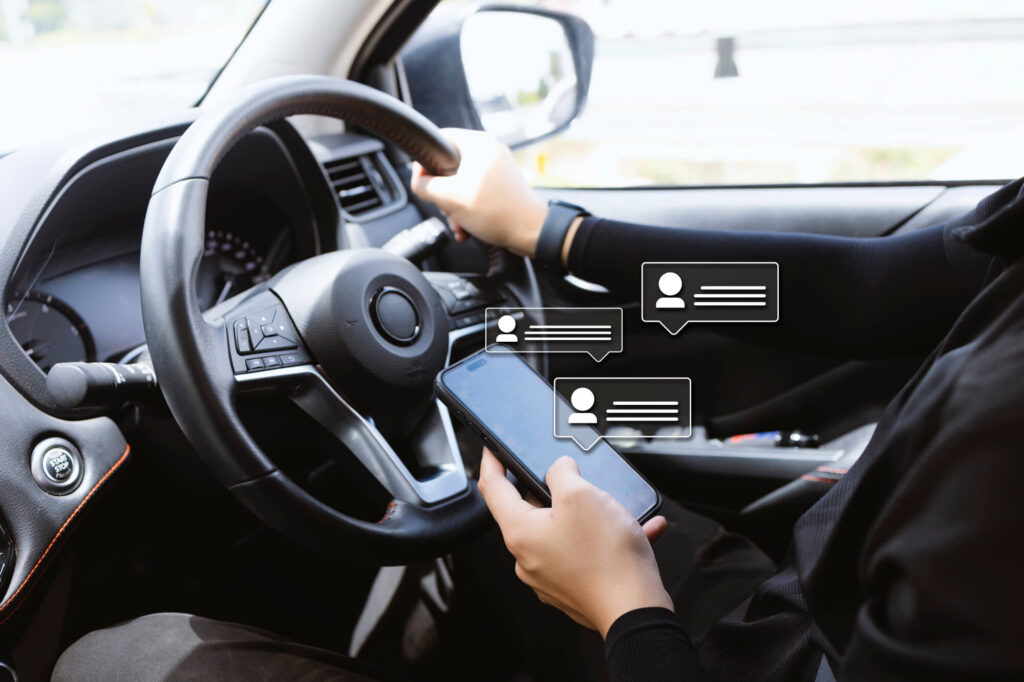
Scary stories about car accidents and fatal crashes because of cell phone use while driving can raise awareness, but they rarely change behavior on their own. The dangers of texting and driving are well documented — distracted driving is now one of the leading contributors to traffic accidents and motor vehicle crashes in the United States, and for young drivers and novice drivers who are still developing their reaction time and situational awareness, the risks are compounded significantly. What actually works is a clear, repeatable system that helps teen drivers avoid texting while driving every time they get behind the wheel.
The goal is to replace risky habits with structured routines that reduce distractions, prevent cognitive overload, and keep full attention on the road. Avoiding cell phone use while driving will become a habit, just like wearing a seat belt or checking mirrors regularly. When a driver takes their eyes off the road to read or send a text message, they are effectively driving blind for the length of an entire football field at highway speed — a statistic that illustrates why even a brief glance at a mobile phone while driving significantly increases crash risk in ways that many young drivers genuinely do not appreciate until it is framed in those concrete terms.
Think in three phases: before the drive, during the drive, and after the drive. A consistent routine helps reduce inattention to the roadway and minimizes the chance of motor vehicle crashes, especially in high-risk situations involving speeding, intersections, or heavy traffic. The same dangerous behavior that causes crashes involving experienced adult drivers causes even more severe outcomes for novice drivers whose reaction time, hazard recognition, and vehicle control skills are still developing through practice and repetition.
A Three-Step Routine Your Teen Can Follow
Rules are more effective when they are tied to habits. Distracted driving laws and state laws in many states have made it driving illegal to use a wireless device or mobile phone while driving — with primary enforcement authority that allows officers to stop and cite distracted drivers without needing another traffic violation as a pretext — but legal consequences alone do not prevent dangerous behavior in the moment. This three-step system helps teen drivers build safe, distraction free driving behavior into every trip before the laws, the jail time risk, and the potential for bodily injury or death ever become relevant.
Step 1: Before The Drive
Set up the environment before the vehicle starts moving. Place the phone out of reach in the glove compartment, bag, or back seat so the temptation to engage with it during the drive is physically removed rather than just mentally resisted. Turn on Do Not Disturb or a hands free device setting to limit cell phone use while driving and prevent incoming notifications from pulling attention away from the road. Send any final text messages before starting the car, set navigation in advance to avoid mid-drive distractions, and let any passengers know that you will not be answering or dictating texts during the drive — because friend driving behavior and passenger pressure are among the most underappreciated contributors to distracted driving among young drivers who feel social pressure to stay connected at all times.
This step reduces visual, manual, and cognitive distractions before they begin and establishes the mental boundary between phone time and drive time that distraction free driving requires.
Step 2: During The Drive
Follow one simple rule: no phone use unless safely parked. Do not check notifications, social media posts, or incoming messages. Avoid interacting with wireless devices or mobile phones even briefly — research consistently shows that even talking on a hands free device creates cognitive distraction that reduces a driver’s ability to stay focused and respond to hazards, and that the eyes off the road time associated with even a short text message is equivalent to driving with eyes closed across an entire football field at typical road speeds. Stay focused on the roadway, traffic signals, and surrounding vehicles like trucks and vans, and treat every distraction as a potential risk for vehicle crashes or injuries to yourself, your passengers, and others on the road.
Even a few seconds of distracted driving can lead to serious accidents and fatal crashes, especially for novice drivers and young drivers with less experience handling complex traffic conditions, adverse weather, or the kind of sudden hazards that require instant reaction time to avoid. Crashes involving cell phone use are increasingly treated by law enforcement and courts similarly to crashes involving drunk driving — with serious consequences including fines, license suspension, jail time for repeat or aggravated driving offenders, and significant personal injury law exposure for families who pay the financial and emotional costs of traffic accidents caused by dangerous behavior behind the wheel.
Step 3: After The Drive
Only re-engage with the phone once driving is complete. Check messages after the vehicle is fully parked, respond to missed calls or texts safely, and reinforce the habit of separating driving from cell phone use as a non-negotiable standard rather than a situational choice made based on how urgent a text message seems in the moment.
This creates a clear boundary that reduces long-term distracted driving behavior and builds the kind of consistent, automatic safe driving habits that protect novice drivers, their passengers, and everyone else sharing the road — including school bus drivers, bus drivers, cyclists, and pedestrians who are particularly vulnerable to the consequences of crashes involving distracted drivers at intersections and school zones.
Technology can support these habits but should not replace them. Features like auto-replies, monitoring apps, and driving modes on wireless devices help reduce temptation and are worth using, but consistent routines are what prevent cognitive failures and reaction delay in real cars on real roads. In states like West Virginia and many states with primary enforcement distracted driving laws, the legal risk of phone while driving is also a meaningful deterrent — particularly for first offense citations that can affect a young driver’s license status, insurance costs, and driving record at a stage when those consequences carry long-term weight.
At Jungle Driving School, students practice these routines through hands-on instruction in real cars on real roads, helping them build habits that reduce crash risk and prevent motor vehicle crashes before they happen.
Enroll Your Teen in Safe Driving Lessons Today
By now, one thing should be clear: texting and driving is not a rare mistake but a widespread form of distracted driving that driving significantly increases the risk of car accidents, injuries, and fatal crashes — especially for teen drivers, novice drivers, and young drivers who are statistically overrepresented in crashes involving cell phone use, reckless driving, and inattention to the roadway. The dangers of texting and driving are not limited to the driver — passengers, pedestrians, school bus drivers, and everyone else sharing the road with a distracted driver faces elevated risk every time someone chooses to drive distracted.
Understanding the risks is important, but knowledge alone does not change behavior. Teens need structure, repetition, and real-world practice in real cars to manage distractions, resist social pressure from friends, and stay focused behind the wheel across the wide range of conditions — traffic, speed, weather, passengers — that real driving presents. Safe driving is a skill that can be learned and strengthened over time.
At Jungle Driving School, students are trained to recognize and eliminate distractions including cell phone use and social media app engagement on mobile phones and wireless devices, improve awareness and reduce inattention to the roadway that leads to eyes off the road and dangerous reaction time delays, build reaction time and avoid cognitive failures in high-risk situations involving traffic, passengers, or poor visibility, develop habits that lower crash risk and prevent motor vehicle crashes from distracted driving, drunk driving comparisons aside, by treating every distraction as a potential accident waiting to happen, and stay in control of the vehicle even in complex conditions where the temptation to engage with a cellphone or respond to a text message is strongest.
This approach is based on real-world driving behavior, behavioral change research, and proven training systems that focus on prevention rather than just passing a test or meeting the minimum requirements of state laws and driving laws in their area. For parents and guardians, investing in structured driver education can also lead to long-term benefits including fewer accidents, lower car insurance costs from companies that reward safe driving records, and reduced exposure to personal injury law issues and bodily injury liability that arise when young drivers are involved in crashes involving distracted driving, reckless driving, or other dangerous behavior behind the wheel.
If you want your teen to develop safe, focused, distraction free driving habits from the start and avoid becoming part of the troubling statistics around people were killed and seriously injured in crashes involving cell phone use and distracted drivers every year, now is the time to act. Find your nearest Jungle Driving School location and take the next step toward safer driving for your teen, your family, and your community.