
Learning to drive is a major milestone, but it’s also one of the highest-risk activities that teenage drivers and high school students will face. Inexperience, peer pressure, and overconfidence make teenagers especially vulnerable to distracted driving, which significantly increases crash risk during the early stages of driving.
According to the National Highway Traffic Safety Administration (NHTSA) and the AAA Foundation for Traffic Safety, distraction plays a major role in motor vehicle crashes involving teens. Texting, cell phone use, social media, and other in-car distractions contribute to thousands of car crashes, injuries, and preventable driver fatalities each year, especially during busy times like summer vacation and weekend outings.
Distractions generally fall into three categories:
- Visual distraction (eyes off the road)
- Manual distractions (hands off the wheel)
- Cognitive distractions (mind off driving)
These behaviors are closely monitored during Driver Education programs and Graduated Driver Licensing (GDL) stages, from a learner’s permit to an intermediate license, and finally, full licensure. Examiners expect teens to demonstrate focus, awareness, and control at all times.
The good news? These distractions are common and preventable. The following strategies help teens build safer habits, reduce crash risk, and prepare for a successful driver’s license test.
Way #1 – Using a Cell Phone While Driving
Using a cell phone while driving is the most dangerous and common distraction among teen drivers (although many adult drivers don’t fare much better in this regard either).
Texting and driving, checking social media, responding to messages, or using driving apps creates all three types of distracted driving at once: visual, manual, and cognitive.
Research from NHTSA, the AAA Foundation Report, and naturalistic driving studies shows that teens who use their cellphone while driving are far more likely to be involved in crashes involving a teen driver. Even a few seconds of inattention can lead to serious accidents, costly medical expenses, or lifelong consequences.
Phone distraction is also especially risky when combined with other dangers such as speeding, fatigue, or impairment from alcohol, marijuana, or other illicit drugs. Whether it’s drunk driving or a quick puff from a vape, a distraction makes already risky situations far more deadly. No sober driver strategy can offset a distracted one.
From a testing standpoint, using a phone is one of the fastest ways to fail a road exam, during a Driver’s License test, touching or interacting with a phone signals poor judgment and a lack of readiness for independent driving.
How to Avoid It
- Place the phone out of reach (glove box, backpack, or back seat).
- Turn on “Do Not Disturb While Driving” or use parental tools like the Greenlight app.
- Never text, email, or scroll social media while driving.
- Set navigation before driving or pull over safely if needed.
- Treat phone-free driving as a non-negotiable habit, just like wearing a seat belt.
Building this discipline early helps teen drivers progress safely through Graduated Drivers Licensing programs and develop lifelong, distraction-free driving habits.
Way #2 – Adjusting Navigation, Music, or Vehicle Controls While Driving
Many teen drivers underestimate how distracting it can be to adjust navigation, music, or vehicle controls while the car is moving. Entering directions into GPS, scrolling playlists, or adjusting climate settings may seem harmless, but each action pulls attention away from the road and increases crash risk.
These behaviors create both visual distraction and manual distractions, forcing drivers to look away from traffic and remove at least one hand from the wheel. According to NHTSA and AAA Foundation for Traffic Safety research, even brief glances away from the road significantly increase the likelihood of motor vehicle crashes, especially for inexperienced drivers still developing core driving habits.
During a driver’s license road test, examiners watch closely for unnecessary adjustments while driving. Reaching for controls, looking down at screens, or appearing unfocused can result in lost points or failure, particularly during turns, intersections, and lane changes.
How to Avoid It
- Set navigation, music, and climate controls before putting the vehicle in gear.
- Choose one playlist or radio station and leave it alone while driving.
- Adjust mirrors, seat position, and steering wheel before starting the trip.
- If something must be changed, pull over safely before making adjustments.
- Keep both hands on the wheel and eyes up, especially in traffic or unfamiliar areas.
Establishing a “ready before you roll” routine helps teen drivers stay focused and confident, both on test day and in real-world driving.
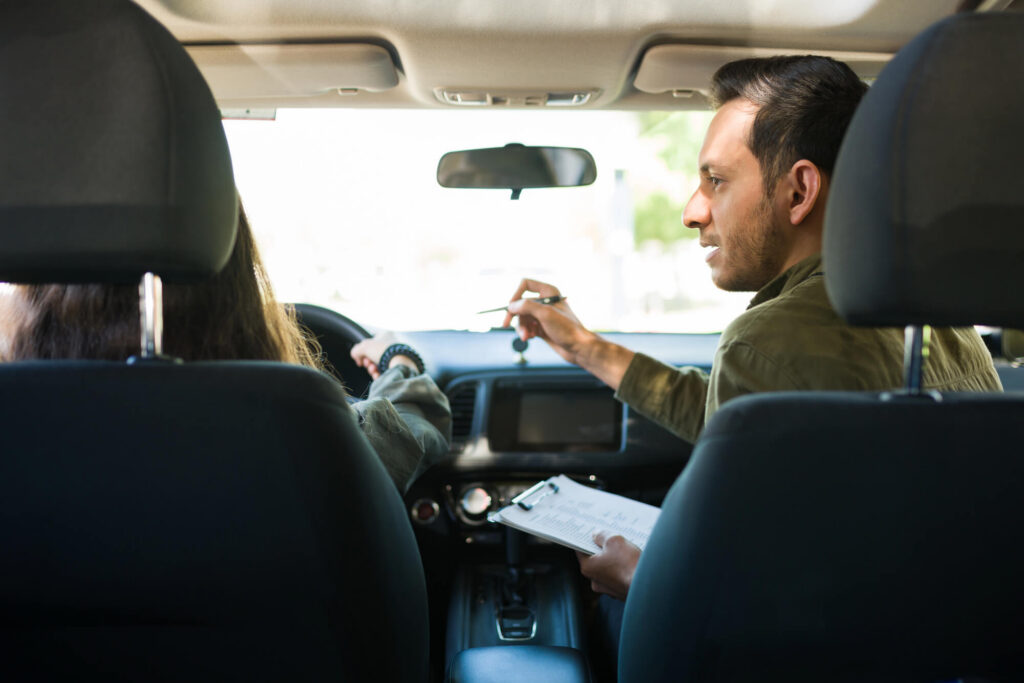
Way #3 – Passenger Distractions and Peer Pressure
Passengers are one of the most underestimated sources of distracted driving for teenage drivers. Friends in the car can increase noise, conversation, and pressure to take risks, such as speeding, using a cell phone, or rushing through yellow lights. Research from NHTSA, the AAA Foundation Report, and multiple naturalistic driving studies shows that the presence of teen passengers dramatically increases the likelihood of crashes involving a teen driver.
This risk is especially high during summer vacation, weekend outings, and trips with other high school students, when excitement and social energy are high. Talking, laughing, loud music, or encouragement to “go faster” all contribute to cognitive distractions that pull attention away from traffic conditions.
Graduated Driver Licensing laws often restrict passengers for a reason. Teens in the learner’s permit and intermediate license stages are still building judgment and situational awareness, and added distractions can quickly overwhelm their ability to respond safely.
How to Avoid It
- Limit passengers during early practice drives and before full licensure.
- Set clear expectations with friends before driving begins.
- Keep music volume low and conversations calm.
- Ignore pressure to speed or take risks and focus on safe driving decisions.
- Remember: the driver is responsible for everyone in the vehicle.
Learning to manage passengers is a key step in progressing safely through Graduated Driver Licensing programs and becoming a confident, responsible driver.
Way #4 – Skipping Basic Safety Routines Before Driving
Many teen drivers become distracted before the car even starts moving. Forgetting to fasten a seat belt, adjust mirrors, or mentally prepare to drive signals a lack of focus that often carries into traffic situations. These small lapses increase crash risk and are closely watched during Driver Education instruction and road tests.
Examiners expect teens to follow a consistent safety routine every time they drive. Failing to buckle up, check mirrors, or secure a cell phone immediately raises concerns about judgment and readiness. Research shows that drivers who skip basic routines are more likely to make additional errors, especially at intersections and during lane changes.
How to Avoid It
- Buckle your seat belt before putting the car in gear.
- Adjust mirrors, seat position, and steering wheel before driving.
- Secure phones and other loose items out of reach.
- Take a moment to focus before moving: no rushing.
- Treat preparation as part of driving, not an optional step.
A consistent pre-drive routine helps teens stay focused and confident from the first mile to the last.
Way #5 – Cognitive Distractions: Stress, Fatigue, and Substance Use
Not all distractions are physical. Cognitive distractions, such as stress, fatigue, or emotional overload, can be just as dangerous as phone use. Teenagers juggling school, work, sports, and social lives may start driving while mentally unfocused, increasing the likelihood of motor vehicle crashes.
Substance use adds another serious layer of danger. Drunk driving, drinking and driving, and driving under the influence of marijuana and illicit drugs impair reaction time, judgment, and awareness. Even low levels of blood alcohol content or blood alcohol concentration significantly raise the risk of car crashes, especially for inexperienced drivers. There is no safe shortcut; every teen driver must be completely sober, alert, and focused behind the wheel.
How to Avoid It
- Never drive after consuming alcohol, marijuana, or other drugs.
- Always choose to be a sober driver.
- Avoid driving when overly tired, stressed, or emotionally upset.
- Delay driving or ask for help if focus feels compromised.
- Remember that clear thinking is just as important as vehicle control.
Learning when not to drive is a critical skill for long-term safety.

How Reducing Distractions Helps Teens Pass Their Driving Test
Teens who master distraction-free driving during the learner’s permit and intermediate license stages perform better under pressure and transition more smoothly into full licensure.
That’s because, during a driver’s license road test, examiners look for:
- Focus
- Awareness
- Consistent control of the vehicle
Distracted driving, even briefly, often leads to missed mirror checks, poor lane control, or delayed reactions.
With strong habits built early through Graduated Drivers Licensing programs, teens reduce their risks of mistakes, lower their anxiety, and demonstrate readiness for independent driving.
Focused drivers build skills that prevent accidents, reduce medical expenses, and support a lifetime of safer driving; they don’t just pass tests.
How Jungle Driving School Teaches Distraction-Free Driving
At Jungle Driving School, minimizing distractions is not treated as a side topic, but built into everything we teach.
- Our driver education programs focus on helping teen drivers develop awareness, discipline, and decision-making skills that hold up under real-world pressure, not just during a road test.
- Through The Jungle Way, students learn to anticipate hazards, manage their environment, and stay mentally engaged behind the wheel.
- Instead of reacting late, teens are trained to recognize risks early, whether those risks involve cell phone temptation, passenger distractions, or stressful traffic situations.
This approach aligns closely with Graduated Driver Licensing programs, supporting teens as they progress from a learner’s permit to an intermediate license and ultimately toward full licensure.
Jungle Driving School reinforces focus and accountability at every stage, helping reduce crash risk and preparing students to drive safely long after they earn their driver’s license.
Why Distraction-Free Driving Matters Beyond the Test
Passing the driving test is important, but it’s only the beginning. According to NHTSA, the AAA Foundation for Traffic Safety, and multiple behavioral research studies, the highest risk period for teenage drivers occurs in the months immediately after licensure. This is when distractions, overconfidence, and peer pressure often collide.
Developing distraction-free habits early helps reduce motor vehicle crashes, avoid costly medical expenses, and prevent lifelong consequences from a single poor decision. It also reinforces responsible choices related to alcohol, drunk driving, marijuana, and other substances, where distraction and impairment often overlap.
Safe driving is more about consistency than being perfect, and teens who learn to control distractions are more likely to make smart decisions during everyday drives, summer outings, and unexpected situations.
Building Lifelong Safe Driving Habits Starts Now
Every drive is a chance to reinforce good habits or create risky ones. By minimizing teen driver distractions, teenagers build skills that protect themselves, their passengers, and everyone else on the road.
To recap, teen drivers should:
- Keep cell phones completely out of reach
- Set navigation and controls before driving
- Limit passenger distractions
- Follow a consistent pre-drive safety routine
- Avoid driving when tired, stressed, or impaired
These habits support a lifetime of safer driving decisions.
At Jungle Driving School, we believe confident, focused drivers are made—not born. With expert instructors, proven teaching methods, and a focus on real-world readiness, we help teens become calm, capable drivers who are prepared for whatever the road brings.
If your teen is ready to move beyond distractions and start building safe driving habits that last, it’s time to train the Jungle Way.