
Winter doesn’t announce itself with drama; it just quietly takes a driver’s grip away. For teen drivers, that’s where trouble usually starts: everything feels normal, but the car needs more time, more space, and gentler choices than their instincts expect. The safest winter drivers aren’t necessarily the most confident or aggressive, but rather those who deliberately slow the whole system down. Like a Jungle Cat in cold terrain, they move with patience, protect their space, and act early instead of reacting late.
In this guide, you’ll learn how to help your teen dial back speed and decisions, build a bigger survival zone with smart spacing, use smooth, gentle inputs, respond calmly if the car skids, practice winter skills safely together, prepare the car itself, and lock in a simple pre-trip winter ritual that turns good intentions into repeatable habits, all designed to replace panic with calm readiness when winter changes the road.
1. Slow Everything Down: Speed, Decisions, and Reactions
In winter, your teen should drive slower than usual and make choices earlier than they would on dry roads. Many instructors treat winter as its own season: lower speeds, bigger gaps, and early decisions are the baseline. If conditions look or feel bad, easing off the speed is almost always the safest first move.
Why Winter Speed Feels “Normal” But Isn’t
On winter roads, what feels “about right” is often still too fast. You have less grip, both on steering and your tires on the road, than is normally available.
Dry‑road habits are persistent, especially for new drivers who have not yet felt how much longer stopping can take in the cold. That’s why you’ll often hear about a “winter dial‑back” on speed, even when the road looks clear and straight.
A simple rule of thumb: if it’s wet, snowy, or icy, your teen should drive slower than the limit and slower than their comfort speed on dry roads.
You can reinforce that with a few concrete cues:
- Drop speed more than you think you need to, especially for curves, hills, ramps, and intersections.
- Build in extra time for every trip so they never feel they have to “make up time” with speed.
- Remind them: posted limits are for ideal conditions. In winter, they’re a ceiling, not a target.
That extra margin turns small mistakes into simple corrections instead of emergencies.
How To Help Your Teen Slow Decisions Down
Teens often react late because they feel pushed by lights, traffic, or their own nerves. In winter, that delay is more dangerous because the car has less grip and needs more time for any change. A big part of winter coaching is moving them from last‑second reactions to calm, early prediction.
When you ride with your teen, use quiet questions instead of running commentary:
- “If that light turned yellow now, would your speed give you options?”
- “If the car in front braked hard right here, how would your space and speed feel?”
- “If this ramp or curve were icy, would you be happy with this speed?”
Those questions nudge their brain into prediction mode instead of panic mode. Over time, they start asking themselves the same questions before you have to.
2. Guard Your Survival Zone: Following Distance and Space
In winter, your teen should protect a much bigger “survival zone” around the car than they do in summer. Crash patterns in cold regions often show the same theme: tight gaps and pack driving cause many winter collisions. If you’re ever unsure about the gap, choose the larger one: too much space is rarely the problem; the lack of it is.
As a starting point:
- On wet roads: at least 3–4 seconds behind the car ahead, since brakes take longer to bite.
- On snow: aim for 5–6 seconds. This leaves extra room for gentle braking.
- On ice or mixed conditions (patchy freeze, bridges, shaded spots): stretch it to 8–10 seconds and be ready to add more.
If you’re ever on the fence, tell your teen, “Let’s add one more second of space.” That single habit prevents a lot of scares.
How To Practice Together
The best way to turn distance into instinct is to practice it on calm roads. Many training routes include simple following‑distance drills before moving into heavier traffic. You can borrow the same structure at family speeds.
Try this together:
- Pick a marker – On a clear, straight road, choose a sign or pole ahead.
- Count seconds – When the car in front passes it, your teen counts: “one‑thousand‑one, one‑thousand‑two…”
- Check the gap – Their front bumper shouldn’t reach the marker until the count matches your target (for example, 5–6 seconds on snow).
- Adjust gently – If the gap is too small, they ease off the gas gradually, no sharp brake taps, to open space.
Focus your praise on the habit, not perfection: “I like how you noticed that gap shrinking and calmly opened it up again.”
Side‑space and Wild Drivers
Side‑space matters too, especially around large vehicles and barriers. In many serious winter crashes, drivers had no escape path because they were boxed in. Teaching your teen to notice side‑space is just as important as teaching them to count seconds in front.
Coaching points:
- Avoid being boxed in between a large vehicle and a snowbank, guardrail, or barrier.
- If an aggressive “hyena” driver tailgates or weaves behind them, make space: change lanes when it’s safe or let that driver go by instead of “teaching them a lesson.”
Any choice that preserves space and lowers conflict is a win. A simple comment like, “That was a Jungle Cat move—you protected your survival zone and stayed out of their drama,” tells your teen they did the right thing.
3. Drive Like A Jungle Cat: Smooth, Gentle Inputs
In winter, your teen should treat the pedals and steering wheel like fragile controls, using slow, gentle, and smooth movements. Winter‑safety instructors consistently stress smooth inputs because most incidents begin with one sharp move, not a long chain of tiny ones. On slick roads, every control, steering, braking, and acceleration should feel deliberate and unhurried.
Why Smooth Inputs Matter In Winter
When grip is low, the car can’t handle big changes all at once. A fast steer, hard brake, or sudden burst of power can overwhelm the tires and break traction. That’s why defensive‑driving instructors talk about “feeding in” steering and braking instead of “stabbing” at controls.
Key habits to coach:
- Steer smoothly: no fast jerks of the wheel. Make small, steady adjustments.
- Brake early and lightly: start slowing earlier for lights, turns, and traffic so they can use gentle pressure instead of a last‑second stop.
- Accelerate softly: especially from a stop or on hills, to avoid wheelspin and sideways slides.
- Skip cruise control: don’t use standard or adaptive cruise control on snow, ice, or standing water; it can add power or hold speed when they most need grip.
You can support this by choosing calmer routes at first, fewer sharp turns and sudden stops, so your teen has room to focus on how the car feels.
Simple Cues You Can Use In The Car
Teens remember short phrases better than long lectures, especially when their brains are busy. Many instructors use brief “stick phrases” that pop into a teen’s head when things get tense.
Hands and feet should move like a cat stalking, not swiping. If you notice sudden movements, name the improvement you want, not the mistake:
- “Let’s see if you can make that next lane change with half the steering movement.”
- “On this next light, start slowing a little earlier and see how smooth you can make it.”
Those tiny experiments build body memory. Over time, smooth inputs stop being something they “try” and become simply how they drive.
What Your Teen Should Do If The Car Starts To Skid
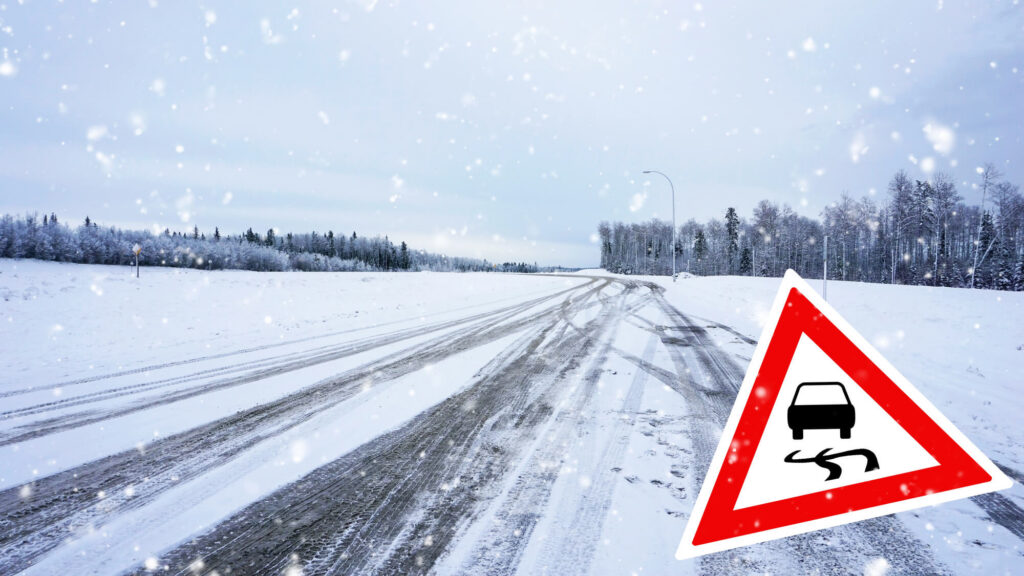
If the car starts to skid, your teen should look where they want to go, ease off the gas, and steer gently toward the open space. Many programs teach some version of this script because it helps teens act instead of freezing. The goal is to stabilize the car first, then gradually bring the speed down once grip returns.
Only practice skid responses at low speeds in safe, open areas with an experienced adult or a qualified instructor. Never deliberately try to make the car skid on public roads, even if they look empty.
To make skid response stick, give your teen a simple three-step memory hook and rehearse it before winter arrives.
The order below is easy to recall when adrenaline surges:
- Eyes: The first job in any skid is to point the eyes at the safe space, not the hazard. Most drivers instinctively stare at the thing they fear—a tree, a ditch, another car—and their hands follow that gaze. Training the eyes to go to the escape route first changes how the whole body responds.
- Feet: Come smoothly off the accelerator—no sudden lifts that could unsettle the car. If they must brake and the car has ABS, then press the pedal firmly and steadily. A pulsing pedal is normal and means the system is working. However, if there’s no ABS (usually older cars), use gentle, repeated presses instead of one hard shove, and only ever practice this at modest speeds.
- Hands: For a rear‑wheel skid (back swings to one side), steer slightly toward the direction the back is sliding until the car lines up, then straighten. Avoid “sawing” the wheel back and forth; think small, smooth correction. Once the car feels settled, gradually bring the speed down if it’s still higher than conditions allow.
Think “calm correction with small moves”, not wrestling the car back under control.
If you’re a parent and feel unsure about coaching this yourself, it’s reasonable to look for a reputable, safety‑focused winter driving lesson where a calm instructor can walk your teen through low‑speed practice in a controlled space.
Safe Ways To Practice Winter Driving With A Parent
To build real winter confidence, your teen should first feel how the car behaves at low speeds in a safe, empty area with a calm adult beside them. Many driver‑education programs begin winter coaching in wide, low‑risk spaces for exactly this reason: the first slip or ABS pulse happens where it’s just a lesson, not a scare.
Choosing a Safe Practice Spot
The practice spot matters as much as the drills. A good location protects both of you from surprise risks and gives your teen room to experiment without big consequences. Instructors usually look for space and simplicity first, then for snow or ice.
A good practice spot is:
- A wide, empty, legal parking lot with room to roll at 10–15 mph.
- No light poles, islands, or curbs close to the path you’ll use.
- No other traffic or pedestrians.
- Only places where practice driving is allowed and safe, and you have permission to be there.
Simple, Low‑speed Drills
Keep all drills at modest speeds so mistakes stay small. Many winter skills can be introduced safely at walking‑to‑jogging speeds, long before your teen sees them in live traffic.
You might try:
- Feel ABS: At 10–15 mph in a straight line, practice one or two firm stops so your teen feels the pedal pulsing. Emphasise this is not for high speeds.
- Smooth steering: Drive gentle “S‑shapes” across the empty lot, focusing on small, steady wheel movements instead of quick flicks.
- Soft starts on snow: Start from a stop with very light throttle and feel for the moment the wheels grip instead of spinning.
A few calm runs of each drill can do more for your teen’s winter confidence than weeks of ordinary commuting.
Ground Rules That Protect Calm
The emotional climate in the car often matters more than the weather. Winter practice goes best when you agree on “how we’ll talk” before you talk about “how we’ll drive”.
Set the emotional rules before you set the drills:
- Set a maximum speed before you begin and stick to it.
- Agree on a stop word that either of you can use to pause and reset.
- Keep the tone calm; narrate instead of snapping: “Okay, now gently off the gas… good… now look where you want to go.”
If either of you feels tense or conditions change, stop. If you notice that most winter drives together feel more stressful than calm, that’s a sign to pause parent‑led practice and consider a session with a professional, safety‑focused instructor who can carry some of that load.
Make The Car Winter‑Ready
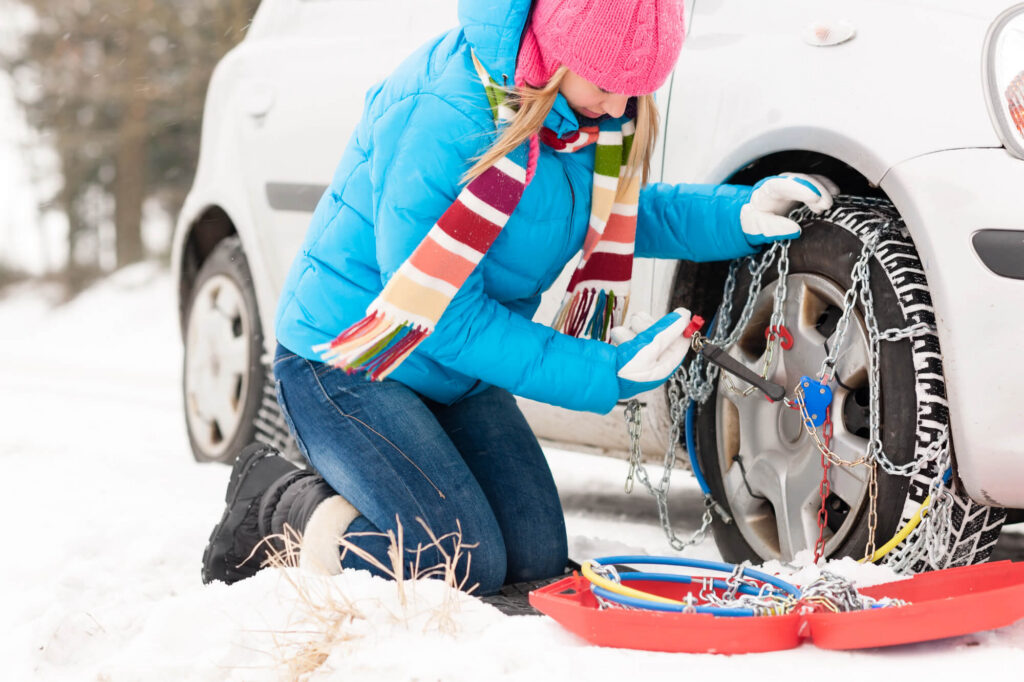
In winter, your teen needs both good habits and a prepared car. Tires, fluids, battery, and visibility equipment are the foundation that every other decision sits on. A simple winter check‑up makes every correction your teen makes more effective and forgiving.
Tires and Grip
Tires are your only contact with the road, so they deserve attention. Extra tread and the right pressure help move water and slush away and keep grip predictable.
Key checks:
- Ensure tread depth is healthy; don’t let tires run down to the legal limit before winter.
- Check pressure regularly, as cold air lowers pressure and grip.
- In areas with heavy snow or long winters, consider proper winter tires on all four wheels.
Show your teen how to spot wear or use a simple coin test so they know what “worn” actually looks like.
Fluids, Battery, and Basics
Cold weather exposes weak parts quickly. A simple walk‑around and a routine service visit before the first real freeze can prevent unpleasant surprises later on.
Focus on:
- Winter‑grade windshield washer fluid that won’t freeze.
- Antifreeze/coolant level and condition checked before deep cold sets in.
- Oil that meets the manufacturer’s cold‑weather spec in the owner’s manual.
- Battery health, especially if it’s a few years old, as cold snaps are harder on weak batteries.
- Wipers in good condition and all lights working, and clean.
Involve your teen in at least one of these checks each season. The more they understand the car, the faster they notice when something feels “off.”
A Simple, Teen‑friendly Emergency Kit
An emergency kit doesn’t have to be complicated or expensive. It just needs to help with three things: staying warm, being seen, and staying in touch. In warmer climates, you may choose a lighter version, but the core idea stays the same.
Useful groups:
- Warmth: blanket, hat, gloves, spare socks, hand warmers.
- Being seen and getting unstuck: torch/flashlight, reflective triangle or vest, small shovel, sand or kitty litter.
- Basics: phone charger, simple snacks, and a drink in a sturdy bottle that can handle freezing.
Let your teen help build and pack the kit so they know what’s there and where it lives in the car. That sense of ownership makes it more likely they’ll think ahead.
Pre‑Trip Winter Ritual For Your Teen
“Be careful” is too vague. A short ritual gives your teen something concrete to do before they move the car, and it turns good intentions into real habits. Many training programs use simple pre‑drive routines like this because they cut down on preventable problems before the wheels even roll.
The Quick Winter Ritual
You can teach your teen to follow the same pattern every time:
- Clear the car: clear all windows, mirrors, lights, hood, and roof—no “peepholes.” Snow on the roof can slide onto the windshield or blow onto cars behind. In some areas, driving with snow or ice on the roof or windows can even lead to fines, so a clear car is safer and more responsible.
- Check the dash: no new warning lights, enough fuel (aim for at least half a tank in winter).
- Set climate: defrosters on, windows fully clear before rolling.
- Scan the ground: look for shiny patches, packed snow, slush ruts, anything that hints at low grip.
- Phone away: use a drive mode that silences notifications or put the phone out of reach.
- Tell someone: for longer or rural trips, share the route and estimated arrival time with a parent or trusted adult.
Find a Jungle Driving School Location and Get Extra Winter Support
Winter driving isn’t just about handling bad weather; it’s about knowing when to slow down, change the plan, or not drive at all, and feeling confident in those choices. Many safety programs repeat the same simple idea: choosing not to drive when conditions or emotions aren’t right is a sign of good judgment, not weakness. When you want extra support, having a trusted local school you can turn to makes those decisions easier.
Connect with a Jungle Driving School location near you and talk about the best blend of classroom, behind‑the‑wheel, and winter‑specific practice for your teen.
However you choose to do it, treating winter as its own driving jungle—and training your teen like a calm Jungle Cat—pays off for every winter to come.