
Learning to drive in Texas is a rite of passage that unlocks freedom, responsibility, and lifelong skills. But for new drivers and their families, navigating the state’s specific requirements can feel overwhelming. Understanding drivers ed Texas guidelines, from how to get a learner’s license to passing the driving test, is the first step to staying safe and legal on the road.
Texas law requires a structured driver education process for most new drivers under 18. And while the Texas Department of Licensing and Regulation (TDLR) and the Texas Department of Public Safety (DPS) oversee the program, it’s up to each student and their family to follow the right path, meet documentation deadlines, and complete the training correctly.
This guide walks you through the State of Texas driver’s education requirements, step-by-step licensing milestones, how Jungle Driving School prepares students through a unique cognitive learning approach, and how parents can play a key role in helping their teens build long-term driving skills, from the first classroom session to full driving privileges.
What Is Driver’s Education and Why Does It Matter
Driver education programs, also known as driver’s ed classes, are structured learning experiences. They are designed to equip new drivers with the essential knowledge, skills, and mindset for safe and legal driving and getting their driver’s license. These courses integrate classroom instruction with behind-the-wheel training and supervised practice, fostering both technical proficiency and situational awareness.
These courses are a vital foundation for road safety, confidence, and long-term skill development. So, whether you’re pursuing a learner’s license, preparing for the road test, or helping your teen navigate the learning process, it all begins with understanding what driver’s education actually delivers.
Purpose of Driver’s Ed
The core goal of any Texas driver education course is to prepare students for real-world driving and not just to help them pass a test. Certified driver education programs are designed to:
- Teach state traffic laws and safety regulations based on the Texas Transportation Code
- Build awareness of street signs, traffic signals, and road markers
- Instill hazard anticipation, situational awareness, and defensive driving habits
- Prepare students for the knowledge test, the driving skills test, and the full driver license application
- Reduce accident risk and help lower insurance costs through early safe driving practices
According to the National Highway Traffic Safety Administration (NHTSA), states that mandate driver’s ed saw up to a 40% reduction in teen injury crashes.
With many Texas teens beginning their training at age 15, a strong educational foundation helps reduce early crash risk and build driver confidence before ever taking the wheel.
How Modern Driver’s Ed Has Evolved
If adding screens to our cellphones wasn’t enough of a distraction, our cars also now have screens and cameras, along with an always-growing list of hands-free features, from listening to podcasts or audiobooks to sending and getting audio messages from friends.
We’re in a distraction-filled world now, so driver’s education isn’t just a legal step toward getting a driver’s license, but a critical safeguard.
As a result, modern driver’s ed in Texas has evolved to go beyond memorizing road signs and rules. Programs now incorporate:
- Defensive driving techniques and decision-making drills
- Instruction on digital distractions, emotional regulation, and multitasking hazards
- Scenario-based training that addresses freeway navigation, urban congestion, and environmental hazards
- Integrated tech like instructional videos, practice quizzes, and Texas Online Drivers Ed platforms
At its best, Texas driver education fosters long-term habits, not just test-day readiness. It’s not about checking boxes. It’s about building drivers who stay alert, calm, and ready behind the wheel.
Texas Driver’s Education Requirements
Driver education in Texas is regulated by the Texas Department of Licensing and Regulation (TDLR) and enforced during the driver license application process by the Texas Department of Public Safety (DPS). These agencies outline exactly what students must complete before they’re eligible for a Texas driver’s license.
Is Driver’s Ed Required in Texas?
Yes. In Texas, driver’s ed is required for:
- Teens under 18: must complete a full TDLR-approved program if they want a driver’s license by the time they turn 18
- Young adults ages 18–24: must complete a state-approved 6-hour driver education course
- Adults 25+: not required by law to get a driver’s license but strongly encouraged to complete a course, especially if driving for the first time
Driver education may be completed through:
- A licensed driver training school (such as Jungle Driving School)
- A public high school program
- An approved Parent-Taught Driver Education (PTDE) course, which requires registration and instructor approval by the TDLR
All TDLR-approved courses for teens must include:
- 32 hours of classroom instruction
- 7 hours of behind-the-wheel instruction
- 7 hours of in-car observation
- 30 hours of supervised driving, including 10 hours at night
- Use of the Texas Parent/Teen Driving Guide for tracking and logging progress
Note: A common mistake is assuming online-only classes or unlicensed instructors will meet state requirements. Be sure the provider appears on the TDLR’s current list of approved vendors before enrolling.
Step-by-Step Licensing Path in Texas
Most new drivers under 18 in Texas follow a Graduated Driver Licensing (GDL) path that looks like this:
- Learner License (Instruction Permit)
- Age 15+
- Complete the first 6 hours of classroom instruction (or pass an approved online course)
- Pass the written knowledge test
- Submit driver license application at a Texas DPS location
- Provisional License
- Complete all drivers education course requirements
- Finish all behind-the-wheel and supervised driving hours
- Pass the driving test (road skills exam)
- Held until age 18, with some restrictions on passengers and curfews
- Full Driver’s License
- Available at age 18
- The student must have completed the provisional period with a clean record
- Submit for unrestricted Texas Drivers License status through DPS
What to Watch Out For
Texas is strict about licensing documentation and process integrity. To avoid delays or disqualifications:
- Only use TDLR-approved course providers—check the Texas DPS website to confirm
- Track all driving hours accurately—use the behind-the-wheel practice log in the Parent/Teen Driving Guide
- Don’t skip supervised driving—it’s required for legal eligibility
- Keep documentation organized—some forms (like Form DL-7.pdf, Court Orders for an Occupational Driver’s License, or reinstatement forms) may be required if delays, suspensions, or legal issues occur
Using unlicensed programs or failing to meet hour requirements can invalidate a student’s practice time, delay road test scheduling, and even affect insurance eligibility.
What to Expect in a Texas Driver’s Ed Program
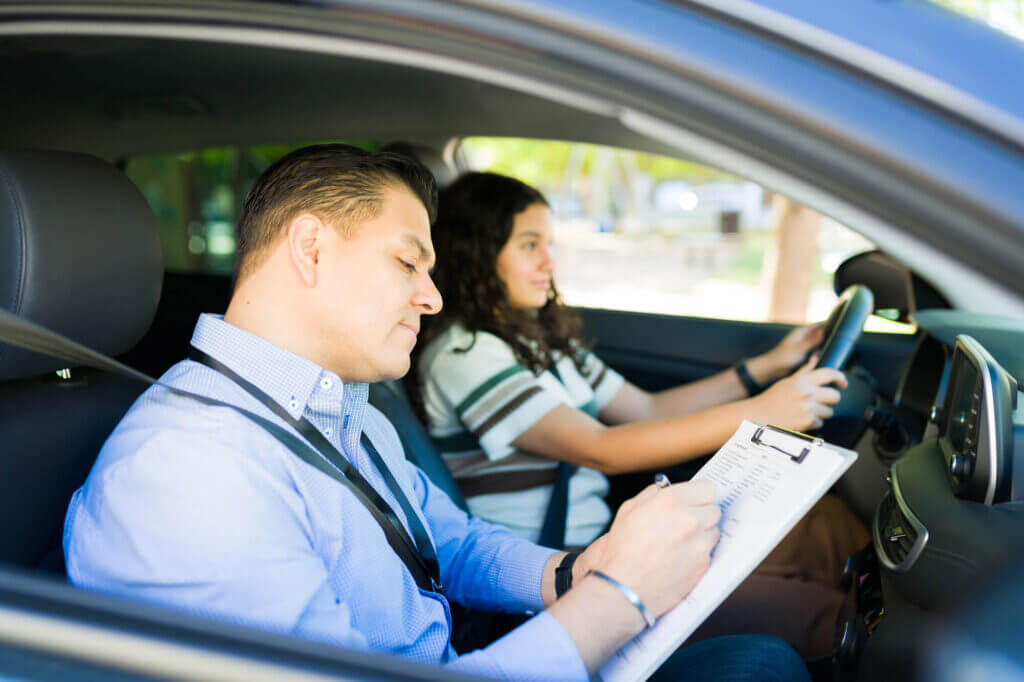
A complete Texas driver education course includes both academic instruction and practical, hands-on training. Whether completed through a licensed driving school, an online program, or a parent-taught route (PTDE), all TDLR-approved options must cover specific requirements set by Texas law.
Classroom Curriculum
The classroom (or online) portion of a Texas drivers education course must cover essential traffic safety content as outlined by the Texas Transportation Code and reinforced by DPS materials like the Texas Driver Handbook. Topics include:
- Texas traffic laws, including speed limits, right-of-way, and seatbelt requirements
- DUI/DWI consequences and substance-related impairment
- Road signs, signals, and pavement markings
- Emergency maneuvers and proper vehicle control
- Defensive driving techniques and decision-making under stress
- Distracted and impaired driving (including texting, fatigue, and emotional responses)
These classroom sessions can be completed either in person or online, provided the course is approved by the TDLR. Many students now opt for Texas Online Drivers Ed platforms, which allow for flexible scheduling and offer practice tests, videos, and interactive quizzes to reinforce concepts.
Completion of the classroom portion also qualifies students to take the knowledge test, which must be passed before applying for a learner license through the Texas Department of Public Safety.
Behind-the-Wheel Lessons
Once classroom instruction begins, students can also begin behind-the-wheel training. This component must be supervised by:
- A licensed driving instructor (for traditional schools)
- A registered parent/guardian (for PTDE programs with TDLR approval)
Texas law requires:
- 7 hours of behind-the-wheel instruction
- 7 hours of in-car observation of another student or instructor
- All training must take place in a dual-control vehicle
During these lessons, students develop essential driving skills like:
- Lane changes, merging, and maintaining proper speed
- Parallel parking and 3-point turns
- Navigating intersections and roundabouts
- Freeway driving and night driving (with special focus on visibility and safety)
Students also begin developing situational judgment, learning how to anticipate risky drivers, respond to weather conditions, and stay alert in congested urban settings. These experiences are vital preparation for the driving skills test (road test), which evaluates a student’s ability to perform these tasks in real time.
Supervised Driving with Parents
In addition to formal instruction, Texas law requires:
- 30 hours of supervised driving with a licensed adult
- At least 10 hours must be completed at night
- Logged using the Texas Parent/Teen Driving Guide and submitted with road test documentation
This supervised driving time must be completed after in-car instruction begins—not before—and is crucial for reinforcing classroom knowledge in varied, real-world conditions.
Tips for effective supervised driving:
- Mix environments: residential streets, highways, urban areas, and rural roads
- Practice at different times of day, including at sunset and after dark
- Track hours accurately using a behind-the-wheel practice log or mobile apps approved by DPS
- Encourage reflection and discussion after each session
This phase of the training process builds muscle memory in the driver’s seat, decision-making confidence, and habits that promote road safety long after the road test is over.
Choosing a Driver Training School in Texas
Not all driver education providers offer the same quality of training. In fact, choosing the wrong one can delay your license, disqualify your driving hours, or result in incomplete documentation at the time of your driver license application.
Here’s how to choose the right driving school in Texas.
Verify TDLR Certification
The Texas Department of Licensing and Regulation (TDLR) requires all driving schools and instructors to be licensed and compliant with current driver education standards. Before enrolling in any program:
- Check the TDLR website for a current list of approved schools and course providers
- Confirm the instructor is certified by the state
- Verify that completion certificates (for both classroom and behind-the-wheel training) are issued and reported properly
For teens, this is especially important because any missing documentation may delay eligibility for a provisional license or even lead to a cancellation of prior training hours.
Compare Curriculum Depth
While all certified programs must meet Texas minimums, the best schools go beyond the basics to help students master the learning process, and not just survive it. Look for programs that:
- Include road test prep, practice tests, and scenario-based training
- Teach safe driving behaviors, not just legal compliance
- Prepare students emotionally and cognitively for real-world driving conditions
Schools like Jungle Driving School, for example, incorporate decision-making drills, awareness training, and hazard recognition as core parts of their instruction, not as afterthoughts.
Look for Tech, Tracking, and Support
Top-tier driver education programs also offer:
- Online access to courses and supplemental materials (e.g., practice quizzes, videos)
- Digital tools for progress tracking, parent updates, and behind-the-wheel documentation
- Support for navigating the Texas DPS system and licensing paperwork
Technology should enhance the training process, not complicate it. Parents should have access to tools that help them coach effectively and stay informed, especially during the supervised driving phase.
How Jungle Driving School Sets the Standard in Texas
Jungle Driving School doesn’t just meet Texas’s driver education standards: we exceed them.
While many programs stop at minimum legal requirements, our approach is built to produce confident, cognitively prepared drivers who thrive in real-world traffic scenarios, not just on paper.
Texas-Approved Curriculum + Real-World Readiness
Our Texas driver education program is fully approved by the Texas Department of Licensing and Regulation (TDLR) and aligned with all required elements, including:
- 32 hours of classroom or online instruction
- 7 hours of behind-the-wheel lessons with a licensed instructor
- 7 hours of observation
- 30 supervised driving hours (10 at night), with logs completed using the Texas Parent/Teen Driving Guide
But we don’t stop there.
We teach students to connect traffic laws and road signs with situational decision-making, like how to interpret lane behavior, anticipate risky maneuvers, and respond with calm control. Whether a student is learning in downtown traffic, a rural backroad, or on a congested Texas highway, they’re taught to drive not just legally, but strategically.
The Jungle Cognition Path
At the heart of our program is the Jungle Cognition Path, an instructional model that goes beyond memorization and develops thinking drivers.
We use metaphor and story-driven instruction to help students categorize and respond to driving behavior, using a unique animal-based system to ultimately turn them into Jungle Cats, our ideal drivers, who are focused, calm, and always scanning their environment.
We train students to recognize patterns, anticipate hazards, and self-regulate emotionally, which enables them to form habits that last far beyond the road test.
Tech-Integrated Training
To reinforce these skills, our program includes:
- Online access to classroom modules and Texas Online Drivers Ed resources
- Instructional videos, guided walkthroughs, and practice quizzes that support various learning styles
- In-car feedback tools that track student progress and highlight areas for improvement
- Parent access to student dashboards for behind-the-wheel hour tracking and skill benchmarks
We also support families with downloadable tools, tips for behind-the-wheel coaching, and guidance on completing DPS requirements, ensuring a smooth path from enrollment to the driver’s seat.
Tips for Success for New Texas Drivers
Succeeding in Texas driver’s education isn’t just about checking off hours—it’s about developing a mindset for lifelong road safety. Here are some field-tested tips to help both students and parents maximize the learning process:
- Start studying the Texas Driver Handbook early: Understanding traffic laws, signs and markers, and state-specific regulations prepares you for the knowledge test and builds essential context for behind-the-wheel practice.
- Use the Parent/Teen Driving Guide for everything: This official DPS document includes your behind-the-wheel practice log, guidance on how to structure lessons, and tips for dealing with common driving challenges.
- Practice driving regularly—even beyond the required hours: While Texas mandates 30 hours of supervised driving, real mastery comes with consistent exposure to different conditions: nighttime, heavy traffic, construction zones, and rural roads.
- Break lessons into manageable skill blocks: Focus on one driving skill per session, like turns, lane changes, or parallel parking, then build complexity over time.
- Embrace the six-month waiting period as a growth phase: Teens must hold a learner’s license for at least six months before applying for a provisional license. Use this time to develop consistency, confidence, and advanced situational judgment.
- Stay calm in the coaching seat: Parents should model calm, assertive behavior. Give specific feedback, celebrate progress, and correct errors with clarity, without emotional escalation.
- Use practice tests and instructional videos: Platforms like YouTube or Jungle’s own LMS system can help reinforce classroom learning and prep students for both the written and road tests.
By treating driver education as more than a legal requirement—and more as a personal growth journey—new drivers are far more likely to stay safe, pass the driving test, and drive with confidence under any condition.
Parent Coaching Guide
Parent involvement is a critical part of the driver education journey in Texas, especially since the state requires 30 hours of supervised driving after behind-the-wheel instruction begins.
- Be calm and encouraging during practice: New drivers are already managing mental overload like road signs, lane positioning, speed, mirrors, and more. Instead of raising your voice or overcorrecting mid-maneuver. Tension in the driver’s seat creates hesitation behind the wheel.
- Start simple and increase difficulty gradually: The real world doesn’t provide perfect driving conditions. So prepare your teen for variety, but slowly. Practice in daylight, then dusk, and finally nighttime, for example. Drive in different weather (when safe): light rain, wind, fog. And, explore varied environments: urban streets, rural roads, and highways.
- Reinforce classroom concepts during drives: It’s easy to focus only on performance, but attitude matters just as much. Use your supervised hours to reinforce defensive driving principles, speed discipline, and emotional regulation.
- Model good driving behavior consistently: While formal driver’s education and professional instruction provide essential structure, at Jungle Driving School, we know that monkey see, monkey do, and the habits teens form behind the wheel are largely shaped by the supervised driving experiences they share with their parents.
- Track hours and celebrate milestones: Texas DPS requires detailed logs of your teen’s supervised driving. Use the Texas Parent/Teen Driving Guide to record the date and time of each session, daytime vs. nighttime driving, and specific skills practiced. Incomplete logs or undocumented practice can delay your teen’s provisional license application.
- Encourage refreshers or road test support: Some students need additional help even after meeting minimum hour requirements. Jungle Driving School offers Road Test Packages and refresher lessons that target specific skill gaps, whether it’s parallel parking or test-day nerves. Encourage your teen to ask for extra help if they’re not fully confident before their driving test.
FAQs About Drivers Ed in Texas
Is driver’s ed required in Texas?
Yes. Driver education is required in Texas for most new drivers. All teens under age 18 must complete a TDLR approved drivers ed Texas education course before they can obtain a learners permit and later a Texas driver’s license. Drivers ages 18–24 must complete a 6-hour adult course, while adult drivers age 25 and older are not required by law but are strongly encouraged to take drivers ed to better understand traffic laws, public safety rules, and DPS testing requirements.
Whether you’re a first time driver or returning after a traffic ticket or license lapse, completing a driver education course helps ensure compliance with the Texas Department of Public Safety.
Can I take classes online?
Yes. Texas allows drivers ed online and parent taught drivers ed programs as long as the online course is TDLR approved. Online training offers ultimate convenience, allowing students to complete coursework on a computer, tablet, or phone with mobile friendly access.
Texas online drivers ed and ed online courses are especially popular with teens, adults, and parents looking for a flexible schedule. Always verify that the provider is an approved course through the Texas Department or DPS before enrolling to avoid extra fees or delays.
How many practice hours are required?
Texas requires 30 hours of behind the wheel training outside of formal instruction. At least 10 of those hours must be completed at night. These driving lessons must be supervised by a licensed driver, typically a parent or guardian in a Texas parent taught driver program.
All behind the wheel practice hours must be logged, completed, and submitted as part of course completion. This hands-on driving experience helps students prepare for the driving test, road test, and real-world driving scenarios.
What if I need to drive for work but have a suspended license?
If your license is suspended and you need to drive for work, school, or essential activities, you may apply for an Occupational Driver’s License. This requires filing a Petition for Occupational Driver’s License and an Order with the court, completing DPS compliance steps, and paying reinstatement fees.
Information, forms, and guidance are available through the DPS website, local county clerk offices, and Texas Department resources. This process allows limited driving access while maintaining public safety standards.
Will driver’s ed lower insurance costs?
Yes. Completing a certified drivers ed education course often qualifies drivers for insurance discounts. Most insurers offer a 5–15% reduction for teens and adults who pass a certified driver education program and maintain a clean driving record.
After course completion, be sure to print and keep your certificate of completion. This certificate may also be required for DPS written test online registration, permit test prep verification, and insurance documentation.
Ready to Get Started?
Drivers ed is about more than just passing the written test or DPS test on the first try. The best programs help students develop confidence, judgment, and real-world driving skills.
At Jungle Driving School, we help students become Jungle Cats — confident, alert, and ready for anything behind the wheel. Our TDLR approved Texas driver education program supports teens, adult drivers, first time drivers, and parents through every stage of the process.
Whether you’re preparing for the permit test, DPS written exam, driving test, or road test, our online training, videos, virtual drive tools, and instructor-guided content make learning convenient and effective.
Enroll in our TDLR-approved Texas driver education program today and take the first step toward confident, real-world driving.
TDLR-Approved | Adventure-Based | Tech-Supported